
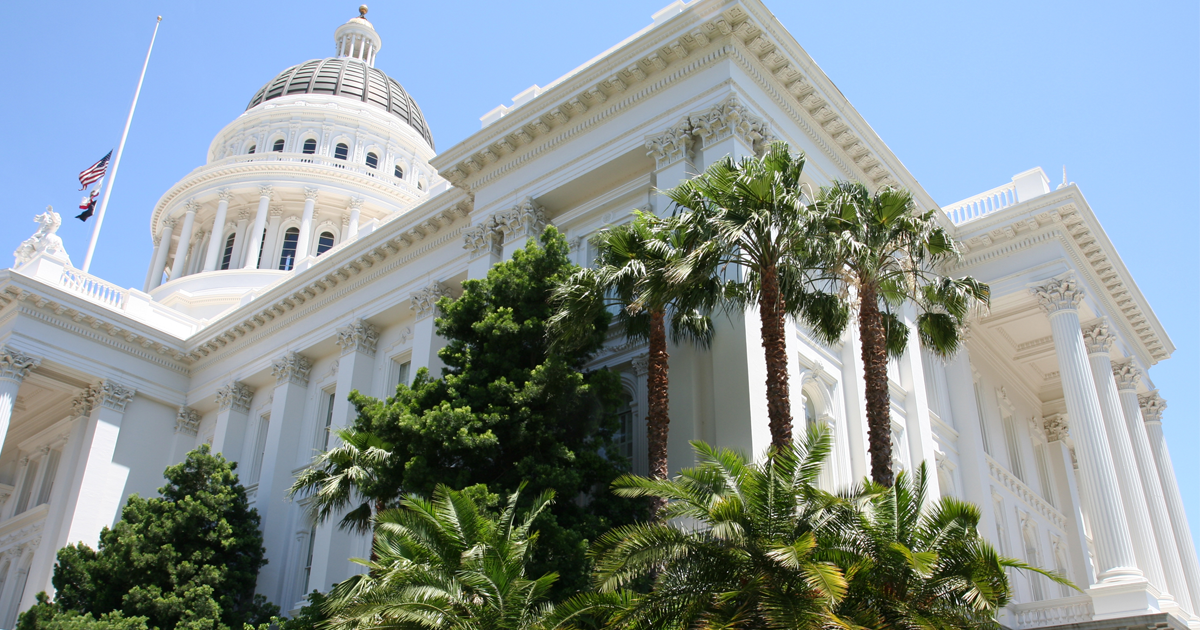
In Save Our Capitol! v. Dept. of Gen Servs. (2024) 105 Cal.App.5th 828—the third appeal challenging renovations and additions to the State Capitol (Project) under CEQA—the Third District Court of Appeal rejected petitioner’s challenges to the revised EIR for the Project on the grounds that newly enacted Senate Bill No. 174 (2023-2024 Reg. Sess.) (SB 174) exempted work performed under the State Capitol Building Annex Act of 2016 (Annex Act) from CEQA. In doing so, the Court determined that SB 174 does not violate provisions of the California Constitution barring the Legislature from making changes to the Capitol building through the use of an “urgency statute.”
After approving the Project, which involves the construction of a new annex, visitor center, and underground parking garage to the historic State Capitol building, two petitioners, Save Our Capitol (Petitioner) and Save the Capitol, Save the Trees (Save the Trees), each filed petitions challenging the Project’s EIR under CEQA. In the initial litigation, the Third District found that portions of the EIR were flawed and directed the trial court to issue a peremptory writ of mandate to address these flaws. (Downey Brand’s coverage of that opinion can be found here.) Accordingly, Respondent Department of General Service (DGS) revised the EIR, and the trial court discharged the writ. In a separate appeal, Save the Trees successfully argued that the trial court prematurely discharged the writ without making the determination that the revised EIR complied with the Court of Appeal’s original opinion. Rather than joining Save the Trees in their appeal, Petitioner here filed a new petition challenging the revised EIR, which the trial court rejected.
Petitioner thereafter filed its appeal in this case; however, the Legislature—after two adverse appellate decisions, and with a third appeal pending—passed SB 174 to exempt the Project from further CEQA review, stating “all work performed pursuant to this [act] shall be exempt from” CEQA’s requirements. Although most bills cannot take effect immediately under rules set forth in the California Constitution, SB 174 took immediate effect as it also provided for appropriations related to the budget. Although Petitioner argued, among other things, that SB 174 was an “urgency statute” that violated constitutional provisions, the Court rejected these arguments finding that SB 174 was correctly characterized as a bill providing appropriations to the budget bill. Accordingly, the Court determined that SB 174 took immediate effect upon passage, and that the recent legislation required the Court to reject Petitioner’s claims that DGS violated CEQA.
Key Takeaways
- Rather than attempting broad CEQA reform measures to prevent projects from becoming mired in litigation, the Legislature has long shown a willingness to pass legislation to simplify the process for particular high-profile projects. While this stop-gap approach may successfully exempt certain projects favored by lawmakers, it offers no aid to projects that make a good-faith attempt to comply with CEQA’s rigorous informational and procedural requirements only to get waylaid for years in the courts.