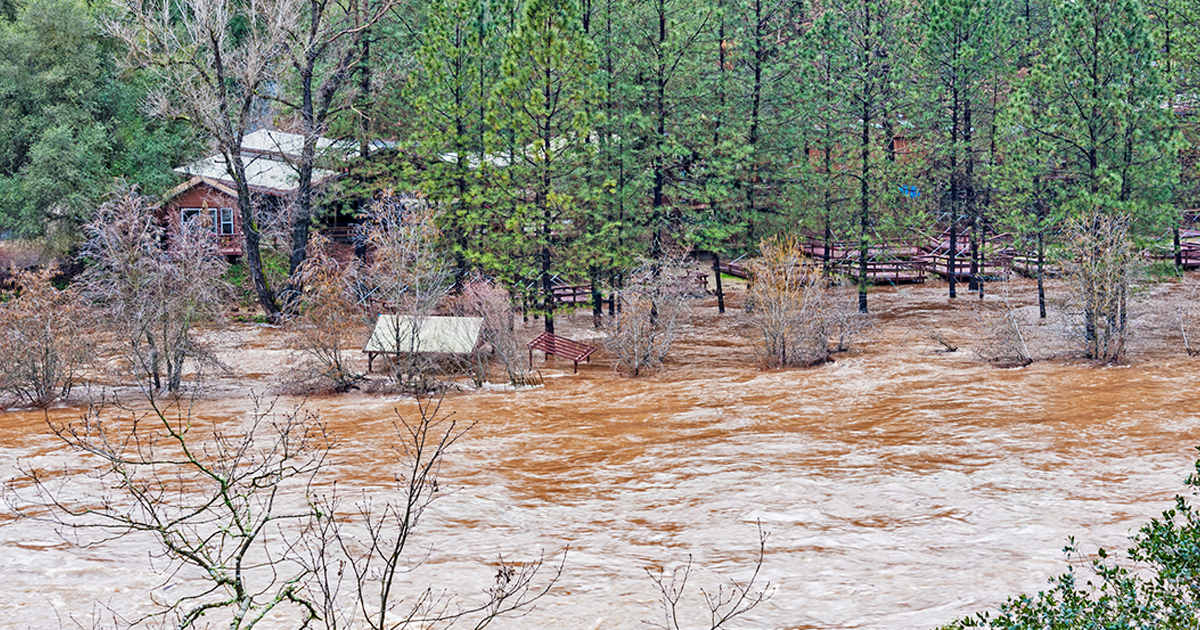
On July 28, 2025, the Director of Civil Works for the United States Army Corps of Engineers (USACE), Eddie Belk, issued guidance for analyzing induced flooding. This guidance is intended to help USACE Districts and Divisions in managing an analysis of induced flooding in planning studies (and those projects under design or construction) as a result of “recent court decisions on the takings implications of induced flooding.” USACE has now concluded that “it should not be assumed, in lieu of a takings analysis, that takings will not result merely because any induced flooding will be slight, or because the induced flooding is temporary or intermittent in nature.”

While there are several cases that appear to be driving USACE’s new guidance, the primary case seems to be Ideker Farms v. United States, 71 F.4th 964 (Fed. Cir. 2023). This 2023 decision of the Federal Circuit appears to be causing USACE to think more conservatively about the possibility of USACE actions resulting in later “takings” of private property, and this is affecting the way in which USACE is thinking about real estate questions that come up in the context of planning studies.

The Fifth Amendment to the U.S. Constitution includes the Takings Clause which instructs: “nor shall private property be taken for public use, without just compensation.” When performing planning studies, USACE has always examined the hydraulic impacts of a proposed project to determine whether third-party lands would be affected by a takings, and therefore whether those third parties needed to be compensated for the impacts. In fact, guidance on the books from 1996, 1998, and 2000 all confirms this approach. But in doing so, USACE had historically only looked at certain events to determine impacts. 

Influenced by Ideker, USACE’s guidance provides a framework for how to analyze these issues going forward. But to understand the guidance and to apply the judgment that is required by the new guidance, a proper understanding of takings law in the context of flooding is required. Click here for the full article to understand that context and to apply that context to the new guidance. 

Photo of Scott L. Shapiro Scott L. Shapiro

Scott Shapiro is known for his expertise in flood protection improvement projects throughout California’s Central Valley.
He is helping clients with more than a billion dollars in projects in California’s Central Valley and issues involving the Federal Emergency Management Agency (FEMA) and the…

Scott Shapiro is known for his expertise in flood protection improvement projects throughout California’s Central Valley.
He is helping clients with more than a billion dollars in projects in California’s Central Valley and issues involving the Federal Emergency Management Agency (FEMA) and the U.S. Army Corps of Engineers (USACE) throughout the Western United States.

With a special focus on massive flood protection improvement projects, Scott advises clients through regulatory, contractual, financing, and legislative challenges. Acting as general or special counsel, he regularly interacts with senior management at USACE (Headquarters, South Pacific Division, and Sacramento District), the California Department of Water Resources, and the Central Valley Flood Protection Board. He was named to the National Section 408 Task Force and has been invited to give testimony to the National Academies. Scott was instrumental in helping the first regional flood improvement agency that took a basin threatened by flood risk from less than 30-year level of protection to a level of protection approaching 200-year.

Having worked with FEMA on issues of floodplain mapping and levee accreditation for many years, Scott has developed collaborative environments in which he fosters win-win solutions for his clients. He is also currently serving as the lead counsel on a flood insurance rate map (FIRM) appeal and has drafted Federal legislation to modify the National Flood Insurance Program (NFIP) several times.

Scott is known throughout the region for his extensive litigation experience focusing on cases arising from levee failures. He has litigated levee failures resulting from underseepage, failed encroachments, and rodent burrows as well as briefing levee overtopping cases at the appellate level. Scott is one of the few attorneys with experience litigating flood cases on behalf of plaintiffs as well as defendant government entities.