
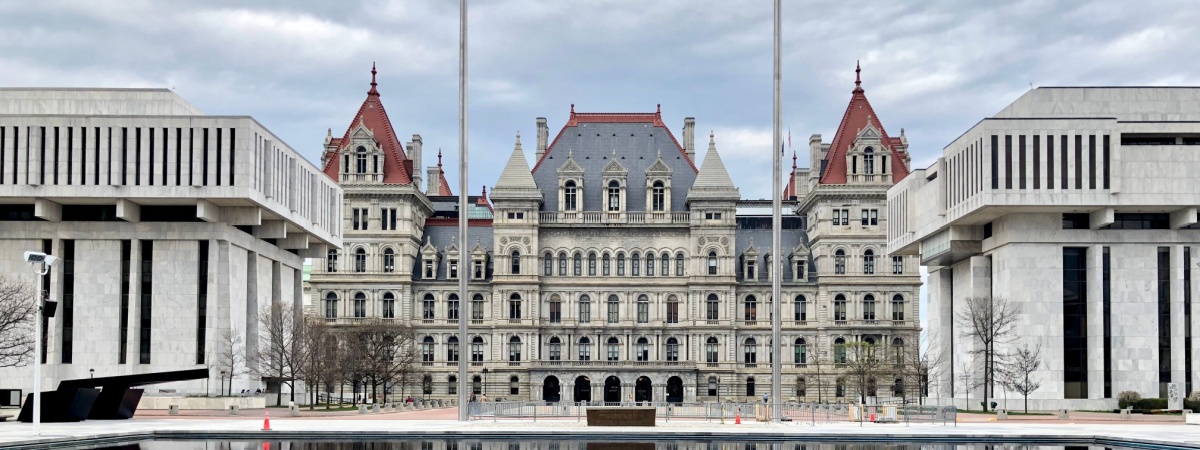
On Feb. 12, 2026, the New York State Public Service Commission (PSC) initiated a new proceeding (Case 26-E-0045) to reform how large electricity users connect to the grid. Case 26-E-0045, titled “In the Matter to Address Interconnection Reforms for Large Loads,” aims to reform and define interconnection policies for high-demand electric customers and support both modernization and economic development goals. This proceeding follows the Governor’s direction in her State of the State address to attract responsible new businesses, give them the certainty they need to invest in New York, and protect New York ratepayers.
What Is This Proceeding About?
At its core, Case 26-E-0045 is a PSC effort to consider changes to the rules governing interconnection — the technical and administrative process by which large electricity users physically and contractually connect to the grid. This is significant because traditional interconnection policies in New York have, until now, focused more on distributed resources and generators (such as solar, batteries, and small-scale energy projects) rather than large load customers. Large loads — including data centers, advanced manufacturing facilities, and other energy-intensive operations — present unique challenges for utilities and grid planners due to their sheer size, their service requirements (many are 24/7, 365 days per year energy consumers), and potential system impacts.
The PSC has identified six main goals to be met by this proceeding:
- Modernize the interconnection process;
- Improve transparency and predictability around grid upgrades;
- Ensure that data centers and similar facilities bear the costs they impose on the electric system;
- Provide for the continued reliability of the electric system;
- Develop programs and policies for large load interconnections that consider objectives of New York State’s climate law, the CLCPA; and
- Explore ways that new, large electric loads might lead to downward pressure on rates for all customers.
This proceeding will examine opportunities for beneficial reuse of waste heat through coordination with utility thermal energy networks where additional efficiencies and benefits can be realized. The proceeding will also consider opportunities to optimize transmission upgrades made potentially necessary by the interconnection of new large loads and provide for improved, timely, and effective engagement between large load applicants, the utilities, and the New York Independent System Operator (NYISO). In this respect, the PSC plan is to identify more effective approaches to data standards, energy and load forecasting, queue management (especially for addressing speculative load), and modeling, all to ensure both an efficient interconnection process and system reliability. The PSC’s goal is to also identify more effective approaches to optimize interconnection costs and reliability of customer-sited and customer-provided resources and delineate clear and equitable impact-based risk- and cost-sharing arrangements for necessary grid upgrades.
The Order directs the development of criteria to define and categorize large loads, allowing for adjustments to requirements for high energy intensive facilities, such as data centers. Consistent with the Governor’s goals to effectively energize New York economic development, the Order calls for providing the framework to support large load projects that drive job creation and economic benefits. At the same time, the proceeding will explore defining additional requirements for facilities that impose significant system demands with limited economic benefits.
The Large Load Challenge
Attracting 21st century, energy intensive industry to New York is a cornerstone of the State’s economic development efforts. However, large loads may have a major impact on grid planning and energy system reliability.
These factors have triggered broader regulatory activity. For example, the Federal Energy Regulatory Commission is also considering issuing a generic rulemaking on large load interconnections — including whether to establish national standards for timely and non-discriminatory access to the transmission system — in response to a Department of Energy directive. The NYISO is similarly considering revisions to its load interconnection process in light of the pending queue requests for over 12 GW of large load interconnections.
Jurisdictional questions, as well as a framework to address system changes resulting from public policy considerations, both must be addressed as the PSC explores these issues.
The State Legislature has also taken up an interest in this issue and over the past several weeks has introduced a variety of bills targeting data centers, ranging from a blanket moratorium to directing the PSC to take administrative action.
How Does This Effort Fit Within the State’s Broader Policy Goals?
New York has far-reaching climate and clean energy goals — including targets that would lead to large expansions of renewable energy, energy efficiency, and electrification. At the same time, affordability has become a focus of all State policies. It thus remains to be seen how that State will ensure that the grid can accommodate both new generation and major new load growth while also maintaining electric system reliability and affordability and achieving emissions targets.
This proceeding may help reconcile the interests of:
- Large energy users seeking predictable, reliable, and efficient grid access;
- Utilities needing clearer interconnection processes and cost allocation rules; and
- Ratepayers that must be protected from undue costs or reliability risks resulting from network upgrades to support these projects.
Given broader trends — such as the rapid growth in large load projects nationwide and grid operator initiatives to streamline interconnection studies and processes — New York’s PSC effort may set precedents for how states balance clean energy and climate change policies with large-scale electrification and industrial growth.
What’s Next in Case 26-E-0045?
The PSC is soliciting comments on the eight key questions outlined in the Order’s appendix by the following timelines:
- April 13, 2026: Stakeholder comments on questions due.
- May 13, 2026: Stakeholder reply to comments due.
- Before Dec. 31, 2026: Technical conference.
- Feb. 12, 2027: Department of Public Service Staff White Paper providing a comprehensive proposal to address the range of issues associated with large load interconnection.