
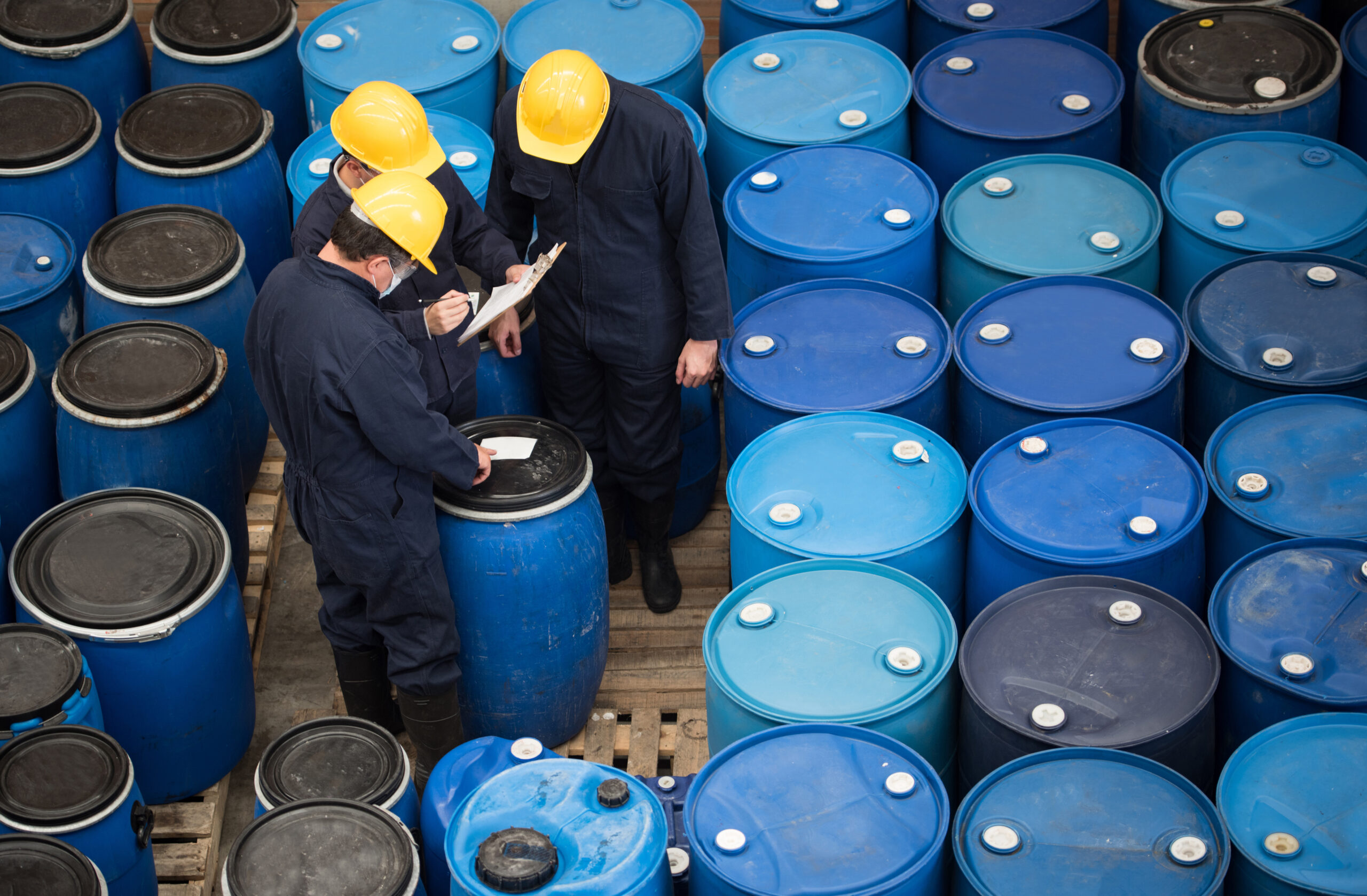
The use of PFAS, often referred to as “forever chemicals”, is widespread, but certain compounds have been linked to environmental harm and human health impacts.
By Michael D. Green, Julia A. Hatcher, Tom Lee, Hunter J. Kendrick, James Bee, and Toon Dictus
Link to Key Points: Key Points:
- The UK government’s PFAS Plan is built on three pillars: understanding PFAS sources, tackling PFAS pathways, and reducing ongoing exposure.
- Initiatives under the plan focus on increased research, monitoring, and evaluation, including through promoting the innovation of safer PFAS alternatives.
Per- and poly‑fluoroalkyl substances (PFAS) are a large group of chemicals, often referred to as “forever chemicals” because their structure means they do not readily biodegrade (i.e., readily break down in the environment or the human body), allowing them to persist and accumulate in water, food, and organisms.1
On 3 February 2026, the UK government released its PFAS Plan, a national initiative to address and minimise the environmental and public health impacts of these chemicals.
Link to Summary of the PFAS Plan Summary of the PFAS Plan
The PFAS Plan is intended to “reduce and minimise the harmful effects of PFAS while transitioning to safer alternative substances”, with elements set out under three pillars: understanding PFAS sources, tackling PFAS pathways, and reducing ongoing exposure.
Link to Pillar 1: Understanding PFAS Sources Pillar 1: Understanding PFAS Sources
The government will expand and refine monitoring to map the presence of PFAS, exposure pathways, and ecological impacts.
Specific initiatives include:
- Monitoring at scale across freshwaters, with England continuing to take 2,400 PFAS samples annually and Scotland expanding its sampling from approximately 300 to 500 in 2026
- Publishing a multi‑criteria PFAS Geographic Information System risk‑prioritisation map for public bodies through the Environment Agency by the end of 2026 to support risk assessment and decision-making
- Commissioning research on wildlife and ecosystem impacts
Link to Pillar 2: Tackling PFAS Pathways Pillar 2: Tackling PFAS Pathways
The PFAS Plan targets emissions across PFAS lifecycles, from manufacture and use to waste and legacy sources. This pillar includes initiatives to reduce PFAS at source and prevent PFAS from entering and accumulating in the environment. The plan does recognise some “essential” uses of PFAS and the continued need for viable alternatives in certain sectors and, in light of this, the plan does not propose a ban on PFAS in cases where “no safe alternatives exist”. In this respect, the plan mirrors recent developments in other regions to contextualise PFAS use by identifying, and treating differently, uses that are of high value to society and without currently viable substitutes and that pose limited risk as compared with their benefits.2
The Plan also signals the expectation for proactive information sharing between industry and regulators on PFAS use and emissions, and highlights government-backed research and development projects to accelerate “safer alternatives”. More specifically, the government intends to address the use of PFAS through regulatory action. Regulatory efforts regarding chemicals include the following:
- The UK is a party to the UN Stockholm Convention on Persistent Organic Pollutants (POP), under which the UK has agreed to the global elimination of PFAS that meet the definition of a POP. In May 2025, long-chain perfluorocarboxylic acids, a group of over 200 PFAS substances, were added to the list for global elimination, which the UK government is now deciding how to implement.
- Previously, three PFAS in widespread use historically — perfluorooctanoic acid (PFOA), perfluorooctane sulfonic acid (PFOS), and perfluorohexane sulfonic acid (PFHxS) — were slated under the Stockholm Convention for global elimination. The UK’s Registration, Evaluation, Authorisation and Restriction of Chemicals (UK REACH) regime, which places prohibitions and conditions on the manufacture, placing on the market, and use of chemical substances when there is an unacceptable risk to human health or the environment, was used as the mechanism to act on these three previous listings. One would expect that UK REACH will be evaluated as a mechanism to address, in whole or in part, the May 2025 listing.
- The PFAS Plan also notes a “potential” UK REACH restriction on PFAS in firefighting foams, which is currently subject to consultation until 18 February 2026 (with PFOA-containing foams having already been prohibited from being used from July 2025).
The PFAS Plan further outlines initiatives regarding industrial emissions and permitting as well as waste and landfill, alongside the need for international engagement given that PFAS contamination is a global issue.
Link to Pillar 3: Reducing Ongoing Exposure Pillar 3: Reducing Ongoing Exposure
The PFAS Plan aims to reduce the exposure to PFAS in air, food, water, products, workplaces, and legacy sites through the use of coordinated standards and targeted interventions.
For instance, this pillar sets out initiatives relating to testing for PFAS in food packaging (and developing tests where not currently available), as well as research on whether bottled waters are at risk of contamination. The government will also consult on the introduction of a statutory limit for PFAS in England’s public supply regulations.
Link to Alignment with the EU Alignment with the EU
The PFAS Plan also includes an initiative to reform UK REACH to enable protection relating to chemical pollution to be applied in a way “more aligned with our closest trading partners, especially the EU, by December 2028”.
The primary regulatory framework for PFAS in the EU is the EU REACH regulation. This sits alongside targeted restrictions and bans, and a proposed Universal PFAS Restriction. Research on the impacts of PFAS (which will inform future regulatory approaches) is an ongoing area. In January 2026, the European Commission published a report on the potential cost of PFAS pollution for society, comparing a “business-as-usual” approach, with scenarios including regulatory compliance, as well as a total ban on PFAS production and use. The business-as-usual scenario includes costs to health, remediation, and ecosystem costs. The study found that a total ban on PFAS production and use would be expected to have the lowest societal costs of PFAS pollution (€110 billion lower than the business-as-usual scenario) due to a reduction in health costs (which are said to fall significantly by 2050), soil remediation costs, and water treatment costs.
Below is a comparison of the current approach to regulatory controls over PFAS in the UK and EU.
| EU Approach | UK Approach | |
|---|---|---|
| Stockholm Convention | The UK and the EU are both parties to the UN Stockholm Convention, under which sub-groups of PFAS have been banned (including PFOS, PFOA, and related substances). | |
| Universal restriction | The EU is considering a proposed “universal” restriction spanning a wide range of PFAS (applying to PFAS as a class, rather than individual substances). The proposal remains in progress, with any eventual restriction requiring consultation with EU Member States. Meanwhile, some Member States (including France and Denmark, among others) are already moving to ban certain PFAS on public safety grounds ahead of EU‑wide action. | No universal restriction is proposed. |
| PFAS in firefighting foams | The European Commission adopted a restriction on PFAS for use in firefighting foams in October 2025, with limits in place from October 2030 (with selected exemptions). | The UK REACH restriction for PFAS in firefighting foams is currently subject to consultation, with PFOA-containing foams having been phased out in 2025. |
| PFAS in water | Member States must comply with Drinking Water Directive thresholds, which came into effect on 12 January 2026. For surface and groundwater, a provisional deal was reached in September 2025 to include PFAS in priority pollutants list, but extended timelines in place for application for Member States. | There is increased monitoring of freshwater proposed under the PFAS Plan. Currently there are no statutory limits for PFAS in surface and groundwater. |
| PFAS in soil | The Soil Monitoring Directive was adopted in September 2025, with a goal of “healthy soils across Europe by 2050”. | There is no monitoring presently. The PFAS Plan includes improving monitoring by initiating pilot sampling to establish baseline concentrations. |
Link to Next Steps Next Steps
The PFAS Plan focuses initially on research, monitoring, and testing rather than a commitment to a universal ban or restrictions regarding PFAS. However, the process of finding suitable alternatives may be complex, and planned government support for innovation in alternatives will be important for businesses with complex supply chains.
As next steps, the government will continue to work with industry, environmental groups, and international partners to build on the action points set out in the PFAS Plan. In 2026, the UK government is expected to consult on a potential statutory PFAS limit for drinking water, and to issue its final opinion on the restriction of PFAS in firefighting foam. Also expected are actions beyond the current government-funded research into PFAS alternatives; these actions would aim to promote greater community of practice between industry and researchers through collaborative events and forums, including through the government’s Chemicals Innovation Forum and its support of ongoing international PFAS alternatives work.
Latham & Watkins will continue to monitor ESG and sustainability regulatory developments in the UK and globally.
This blog post was prepared with the assistance of Samantha Banfield at Latham & Watkins.