
The summer of 2025 has seen the U.S. Environmental Protection Agency (EPA) implement a significant shift in U.S. federal climate policy envisioned by the Trump Administration.
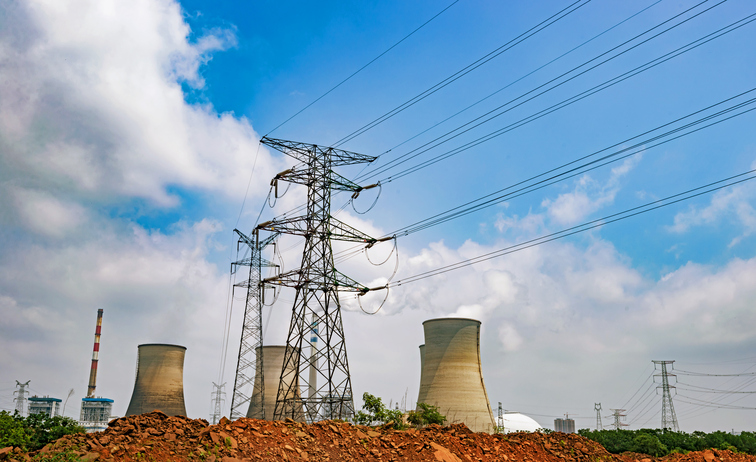
First, on June 17, 2025, EPA proposed a rule, entitled Repeal of Greenhouse Gas Emissions Standards for Fossil Fuel-Fired Electric Generating Units, which would repeal Obama and Biden era Greenhouse Gas (GHG) emissions standards for fossil fuel-fired power plants. This rule proposed three key determinations:
- EPA proposes a reinterpretation of Section 111 of the Clean Air Act (CAA) that would require a “significant contribution finding.” As a predicate to regulation, EPA must first find that GHG emissions from fossil fuel-fired power plants contribute significantly to regulated air pollution.
- EPA proposes to find that fossil fuel-fired power plants do not contribute significantly to the broader aggregation of GHG emissions in the atmosphere.
- With no “significant contribution finding,” the proposed rule would thereby repeal:
- The Obama Administration’s 2015 New Source Performance Standards (NSPS) (40 CFR part 60, subpart TTTT) (Adopted as part of Clean Power Plan).
- The Biden Administration’s 2024 Carbon Pollution Standards (40 CFR part 60, subparts TTTTa and UUUUb).
Second, wasting little time, on July 29, 2025, EPA Administrator Lee Zeldin announced the release of an additional proposed rule, entitled Reconsideration of 2009 Endangerment Finding and Greenhouse Gas Vehicle Standards, published in the Federal Register on August 1. This proposed rule will repeal not only the EPA’s 2009 Greenhouse Gas (GHG) Endangerment Finding (the “2009 Endangerment Finding”), but also all emissions standards for “light-, medium- and heavy-duty vehicles and heavy-duty engines, starting with EPA’s first greenhouse gas set in 2010 for light-duty vehicles and those set in 2011 for medium-duty vehicles and heavy-duty vehicles and engines.”
Background
EPA’s authority over GHG emissions traces back to the 2007 U.S. Supreme Court decision in Massachusetts v. EPA that, in a 5-4 decision, compelled EPA to regulate GHG emissions under the Clean Air Act (CAA) if they were found to endanger public health. The 2009 Endangerment Finding determined just that, citing six key GHGs as harmful pollutants. This decision is the basis for essentially all subsequent federal GHG regulations.
On January 20, 2025, signaling the Administration’s intentions, President Trump issued Executive Order 14154 Unleashing American Energy, directing federal agencies to review existing regulations “to identify those agency actions that impose an undue burden on the identification, development, or use of domestic energy resources—with particular attention to oil, natural gas, coal, hydropower, biofuels, critical mineral, and nuclear energy resources.” EPA’s Repeal of Greenhouse Gas Emissions Standards for Fossil Fuel-Fired Electric Generating Unites and Reconsideration of 2009 Endangerment Finding and Greenhouse Gas Vehicle Standards (collectively, the “Proposed Rules”) are an outcome of this EO.
Legal and Scientific Headwinds
The Trump Administration’s support notwithstanding, the Proposed Rules have a long road ahead. To repeal or revise an existing rule, the EPA must adhere to the Administrative Procedure Act (APA) and Section 307(d) of the Clean Air Act. Accordingly, any repeal, including that sought by the Proposed Rules, require public notice-and-comment processes and justification based on changed science or policy.
To repeal the 2009 Endangerment Finding, for instance, EPA’s proposal focuses on a legal approach, arguing that EPA overstepped its statutory authority in issuing the finding, and challenging the science behind the 2009 Endangerment Finding. Global scientific consensus, however, still overwhelmingly supports the 2009 Endangerment Finding underpinning federal GHG emissions standards. Furthermore, a repeal may require addressing “reliance interests,” which include financial and operational shifts industries have made in response to existing standards. Industry groups and environmental groups are expected to engage in litigation challenging, or supporting, what will become a large and hotly contested political and legal battle.
Recent U.S. Supreme Court decisions also add uncertainty. While Chevron deference was overturned in 2024 by Loper Bright Enterprises v. Raimondo, courts may still apply Skidmore v. Swift (1944) deference. It remains unclear how Skidmore might affect judicial scrutiny of EPA changing its interpretation of an existing statute and in so doing, reverse its own regulations like the 2009 Endangerment Finding and federal GHG emissions standards. However, the current makeup of the Supreme Court, coupled with the fact that Massachusetts v. EPA was a 5-4 decision originally, could ultimately render new Supreme Court decisions that reshape climate policy broadly.
As the Congressional Research Service notes, Congress could also respond in several ways to EPA’s actions on reconsideration of the 2009 Endangerment Finding or implementing regulations. This could include legislatively nullifying or codifying the 2009 Endangerment Finding; provide specific statutory instructions or restrict specific statutory authority on whether or how to regulate GHGs; require EPA to weigh certain policy or economic considerations in its rulemaking; or wait until EPA takes final action to decide how to respond.
Stakeholder Perspectives
As legal and political battles loom, stakeholders have much to consider. EPA’s move poses both opportunities and risks. First, engagement via submitting public comment may help shape future regulatory outcomes but also risks drawing unwanted attention in what will likely be a highly politicized debate.
Secondly, submitting a public comment requires prudence, and stakeholders must weigh the potential immediate benefits to their business against public opinion, economic and regulatory uncertainty, environmental implications, and long-term political considerations. On one hand, for instance, repealing GHG standards could reduce energy costs and aligns politically with an Administration seeking to champion domestic industries. On the other hand, deregulation may undermine well-established decarbonization investments and expose impacted industries to long-term economic, political, and reputational risks.
Comments on the Repeal of Greenhouse Gas Emissions Standards for Fossil Fuel-Fired Electric Generating Unites must be received by EPA on or before August 7, 2025; a virtual public hearing was held on July 8, 2025. Comments on the Reconsideration of 2009 Endangerment Finding and Greenhouse Gas Vehicle Standards Proposed Rule must be received by EPA on or before September 15, 2025; virtual public hearings will be held on August 19 and 20, 2025. Squire will continue to monitor developments in this area and provide updates.