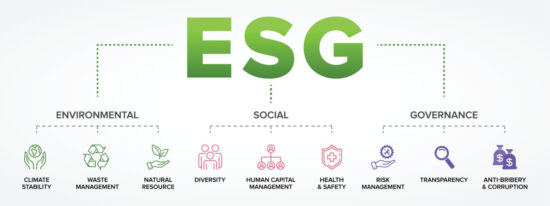
The Hong Kong Monetary Authority (“HKMA”) released a research report last week showing evidence that about one-third of global corporate green bond issuers are reaping the benefits of issuing green bonds without cutting down their greenhouse gas (“GHG”) emissions. This type of ‘greenwashing’ behaviour impedes progress on combating climate change and

Biotechnology: USDA Secretary Releases Statement on U.S.-Mexico Corn Trade After Meeting with Mexican President
On November 28, 2022, the U.S. Department of Agriculture (USDA) Foreign Agriculture Service (FAS) published a statement from Secretary Tom Vilsack regarding a meeting with Mexican President Andrés Manuel López Obrador addressing his December 2020 decree, which called for the

The third version introduces several new disclosure recommendations ahead of what is supposed to be a “Paris moment” for biodiversity in Montreal.

By Paul A. Davies, Michael D. Green, James Bee, and Austin Pierce

As environmental ambitions continue to grow, much attention has focused on climate. A key focal lens for that has been the annual Conference of the Parties to the UN Framework Convention on Climate Change, including the recently concluded negotiations in Sharm el-Sheikh (COP27). However, COP27 also included days focused on cross-cutting issues, such as water and biodiversity. This marks part of an important trend in 2022: the increasing prominence of natural capital in considerations of environmental sustainability.

The Taskforce on Nature-Related Financial Disclosures (TNFD) has released several beta version of its framework on nature-related risk and impact management and disclosure (the TNFD framework) this year. The most recent of these updates (version 0.3) was published in early November, days ahead of the COP27 on climate and approximately a month ahead of the COP15 on biodiversity in Montreal. As discussed in our summary of TNFD v0.2, the TNFD Framework aims to establish a standardized risk management and disclosure framework for organizations to address nature-related risks, playing the same role for nature as the Task Force on Climate-related Financial Disclosures (TCFD) has played for climate.

On November 17, the U.S. Fish and Wildlife Service (Service) announced that $38 million in grant funding is available in fiscal year 2023 for fish passage projects. The goal is to award this funding to projects that address outdated, unsafe, or obsolete dams, culverts, levees, and other barriers. This funding effort is part of an overall $200 million commitment set out in the Bipartisan Infrastructure Law (BIL) and is part of the National Fish Passage Program (NFPP). The NFPP is a voluntary program that provides direct technical and financial assistance for restoration of aquatic organism passage and aquatic connectivity.

The State of Maine is expected to release the Maine Offshore Wind Roadmap in early 2023, and the global offshore wind industry should be watching. Preliminary details from the state’s roadmap—the focus of this post—clearly indicate that Maine is preparing to seize the significant opportunity presented by the Gulf of Maine offshore wind resource.
Maine’s