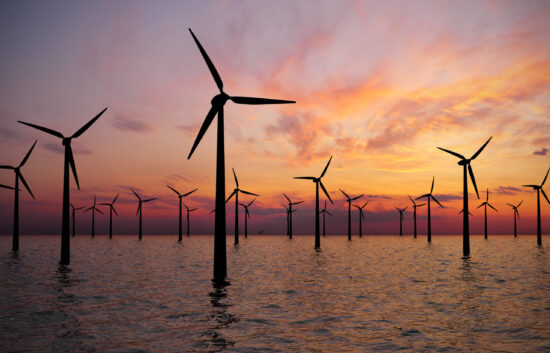
On October 21, 2022, the U.S. Bureau of Ocean Energy Management (“BOEM”) published a Final Sale Notice (“FSN”) for commercial leasing for wind power on California’s Outer Continental Shelf (“OCS”). Specifically, the FSN announces a list of eligible bidders, deadlines, lease stipulations, and financial terms and conditions for an auction of five leases within the Humboldt Wind Energy Area (“WEA”) and Morro Bay WEA. We highlighted these elements of the FSN and discussed bid credits in prior blog posts. Here, we summarize several aspects of the FSN which stem from the California Coastal Commission’s consistency determinations for both WEAs.

On 28 October 2022, the Hong Kong Exchanges and Clearing Limited (“HKEx”) launched Core Climate, an international carbon marketplace designed to allow for the trading of voluntary carbon credits and instruments, which provides a best-in-class, trusted market infrastructure and helps connect capital with climate-related products and opportunities in Hong Kong, Mainland China

One of the most noteworthy features of the October 18th Final Sale Notice (FSN) for the PACW-1 offshore lease auction – which will be the first west coast auction held by the Bureau of Ocean Energy Management (BOEM) – is the availability of “multi-factor” bid credits. The multi-factor approach will allow bidders to earn credits for activities BOEM hopes to stimulate, including making commitments to domestic workforce training and supply chain development as well as entrance into community benefit agreements (CBAs) addressing the impacts of offshore development on local stakeholders. Up to 30% of the cash value of their bid is available to bidders in the form of bid credits, a not insignificant figure given both government and market estimates of potential lease values.

In a published opinion filed October 26, 2022, the Second District Court of Appeal (Div. 6) appears to have significantly expanded the reach of both the Brown Act and the procedural requirements of CEQA in holding, on an issue of first impression, that a public agency must list its staff’s determination that a project is exempt from CEQA as an item of business on the agenda for the meeting at which it considers the project approval. G.I. Industries v. City of Thousand Oaks, et al (Arakelian Enterprises, Inc., Real Party In Interest) (2022) __ Cal.App.5th __. The opinion thus extends San Joaquin Raptor Rescue Center v. County of Merced (2013) 216 Cal.App.4th 1167 (“San Joaquin Raptor”), which held that a public agency’s decision to adopt a CEQA document, such as an EIR or negative declaration, must be described as a distinct item of business under the Brown Act when it is to be considered at a public hearing, to the distinct context of CEQA-exempt projects.

The New Jersey Department of Environmental Protection posted interim soil remediation standards for several per- and polyfluoroalkyl substances (collectively PFAS) to include perfluoro nonanoic acid (PFNA), perfluorooctanoic acid (PFOA), perfluoro octane sulfonate (PFOS), and hexafluoropropylene oxide dimer acid and its ammonium salt (GenX). Posted in the October 17 NJ Register, the interim standards pertain to the direct contact and migration to groundwater exposure paths, and apply immediately.

US EPA periodically issues compliance advisories and enforcement alerts that highlight the agency’s enforcement efforts related to specific regulations and regulatory provisions. One recent EPA enforcement alert targets air emissions from stationary engines subject to the RICE NESHAP under 40 CFR Part 63, Subpart ZZZZ and new source performance standards in 40 CFR Part 60,