
Tucked away in the recesses of the Inflation Reduction Act is a provision that reminds everyone why they love Superfund so much. On its face, it’s simply an incentive for renewable energy development, giving an adder to the amount of the investment tax credit (ITC) or production tax credit (PTC) to which certain renewable energy
China Issues a Plan to Establish a Carbon Emission Statistical Accounting System

**A Chinese version of this blog post follows the English version.**
On 19 August 2022, the National Development and Reform Commission (“NDRC”), the National Bureau of Statistics (“NBS”), and the Ministry of Ecology and Environment (“MEE“) of the People’s Republic of China (“PRC”) jointly issued the “Implementation Plan on Accelerating the Establishment of a Unified and Standardised Carbon Emission Statistical Accounting System (the “System”)” (the “Plan“).
Interior Department Determines ‘Tier 2 Shortage Conditions’ on Colorado River Requiring Additional Water Delivery Cuts, Other Actions in 2023

In light of the “worsening drought crises” and “critically low reservoir conditions” in the Western United States, on Aug. 16, 2022, the U.S. Department of the Interior (“Interior”) announced a number of “urgent actions to improve and protect the long-term sustainability of the Colorado River System.” Assistant Secretary for Water and Science Tanya Trujillo stated
Clean Air Act Amendments Minimally Impact EPA’s Authority to Pass Climate Change Regulation
Much ado is being made of recent amendments to the Clean Air Act (CAA) contained in the Biden administration’s budget reconciliation law passed in mid-August, commonly referred to as the Inflation Reduction Act (IRA). And with good reason, as the law includes the most significant changes to the CAA since 1990, and the new sections formally define greenhouse gases (GHGs) as an “air pollutant,” consistent with the Supreme Court’s 2007 decision in Massachusetts v. EPA.
However, the IRA amendments to the CAA do not in fact make significant substantive changes in law. Legally speaking, they can’t, given that the IRA is merely a reconciliation bill through which Congress may only assign funding. More to the point, none of the IRA amendments to the CAA address in any way the limitations the Supreme Court recently placed on EPA’s authority to adopt climate change regulation in West Virginia v. EPA, notwithstanding some characterizations to the contrary.
Shale Law Weekly Review—Week of August 29, 2022
Oil and Gas Leasing: Environmental Groups File Suit Challenging Peregrine Program
On August 25, 2022, Sierra Club, Friends of the Earth, and Greenpeace filed a lawsuit challenging the U.S. Bureau of Land Management’s approval of Emerald House’s Peregrine “oil and gas exploration” program in Alaska. Sierra Club, et al., v. Bureau of Land Mgmt. The
To ESG or Not: “Damned If You Do, Damned If You Don’t,” at Least in Some US States

On August 24, 2022, Texas’ comptroller of public accounts released the list of financial companies subject to divestment by Texas state governmental entities unless the companies cease boycotting energy companies. This Legal Update provides further detail on this action and other states’ anti-ESG provisions and notes the risks for the investment industry and investors.
Continue
Maine Makes a Bold Move in Banning Most PFAS-Containing Products
Last month, the Maine legislature introduced broad and sweeping restrictions on a range of products containing per- and polyfluoroalkyl substances (“PFAS”). These restrictions are some of the most comprehensive in the country, and, in effect, would ban PFAS in almost all products in the state by 2030. Specifically, the law mandates that on January 1,
CDC Interpretive Summary on COVID-19 for August 26, 2022
By A. Scott Hecker, Adam R. Young, James L. Curtis, and Craig B. Simonsen
Seyfarth Synopsis: The CDC has found that COVID-19 cases, hospitalizations, and deaths are leveling off from their rise over the summer. The CDC advises that Americans can help prevent these numbers from increasing again by staying
Liability Looms Large as EPA Seeks Naming Certain PFAS as CERCLA Hazardous Substances
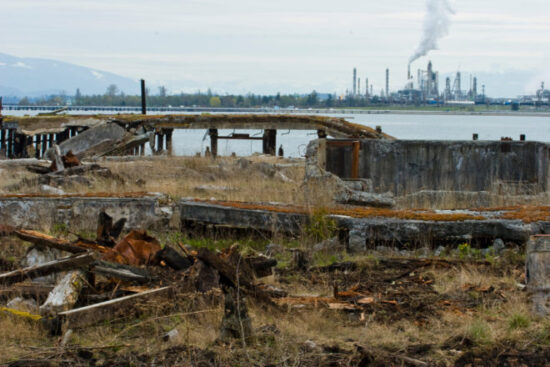
On August 26, 2022, the US Environmental Protection Agency (EPA) released a pre-publication copy of its much-anticipated proposed rule adding perfluorooctanoic acid (PFOA) and perfluorooctanesulfonic acid (PFOS) to the list of “hazardous substances” under the Comprehensive Environmental Response, Compensation, and Liability Act (CERCLA or Superfund). EPA asserts that this regulatory escalation of PFOA and PFOS will facilitate faster cleanup of contaminated sites and reduce exposures to these “forever chemicals.” If finalized, these hazardous substances designations will have significant and immediate impacts on many industries, from creating new reporting obligations to increased compliance, enforcement, and litigation risks related to site cleanup. EPA’s efforts involving PFOA and PFOS fall within the broader, whole-of-agency approach to addressing PFAS first announced in its PFAS Strategic Roadmap and represent its first ever exercise of its authority under CERCLA section 102(a) to designate a hazardous substance.
Perspectives on the Evolving Regulatory Landscape for US Food and Beverage
There are a number of product safety challenges and risks facing the food and drink industry in the US, including balancing innovative products with regulatory compliance. Here, we explore what these risks are, how companies can prepare, how the recall landscape is evolving and our predictions for the future.