
The new corporate diversity law as proposed to be implemented through the regulations, does Not benefit businesses and does Not benefit “unrepresented communities”

The new corporate diversity law as proposed to be implemented through the regulations, does Not benefit businesses and does Not benefit “unrepresented communities”
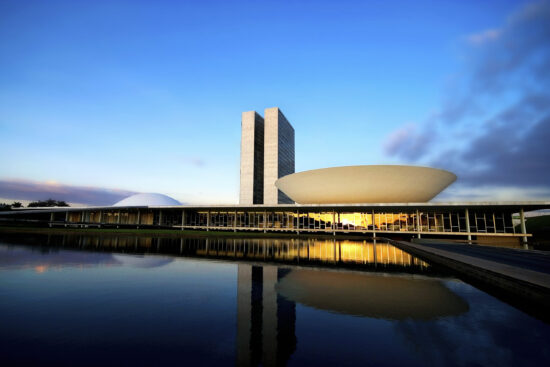
On 1 July 2022, the Brazilian Supreme Court issued a ruling on ADPF 708 (Ação de Descumprimento de Preceito Fundamental), which is another climate litigation case under the court’s scrutiny (please read here and here for more information about other climate litigation cases submitted to the Brazilian Supreme Court). In summary, political parties filed ADPF 708 in June 2020, claiming the Brazilian Federal Administration had not taken appropriate measures to ensure allocation and use of funds from the Brazilian Climate Fund, which is supposed to play an important role in “climate financing”, pursuant to the Paris Agreement, by supporting climate change mitigation projects in Brazil.
A controversial new law gives the California Energy Commission authority over clean energy projects and authorizes the Department of Water Resources to fund new energy sources and extend the life of existing power plants.
By Marc Campopiano, Nikki Buffa, Michael Navarrete-Carroll, Josh Bledsoe, and Kevin Homrighausen
Last week, Governor Gavin Newsom and lawmakers negotiated and approved several “trailer bills” to the state’s $300 billion budget. One of these bills, Assembly Bill (AB) 205, which Governor Newsom signed into law on June 30, 2022, expands the California Energy Commission’s (CEC) authority under the Warren-Alquist Act to now cover solar, wind, and other select clean energy projects. The governor and lawmakers hope the expanded authority will streamline the environmental review and authorization process.
Can carbon-neutral fossil fuels can gain credibility and scale up through voluntary efforts, or will market adoption have to be compelled through mandatory regulation?
Key takeaways1. Fossil fuel producers are looking for interim solutions during the green energy transition2. Use of the carbon-neutral label is susceptible to being seen as ‘greenwashing’3. A global regulatory

This GT Alert highlights news and updates on renewable energy in Latin America.

A lot can happen in ESG in three days. By Wednesday last week, there were three important developments in the world of ESG and sustainable finance from the European Securities and Markets Authority (“ESMA”), the International Capital Markets Association (“ICMA”) and the UK Financial Conduct Authority (“FCA”). Read more

On June 30, 2022, the U.S. Supreme Court decided West Virginia et al. v. Environmental Protection Agency, holding that the EPA lacks authority under Section 7411(d) of the Clean Air Act to limit greenhouse gas emissions from power plants through “generation shifting,” i.e., increasing the use of cleaner energy sources like wind and
The announcement underscores the continued focus on carbon capture, utilisation, and storage in UK energy policy in recent years.
By JP Brisson, Paul A. Davies, JP Sweny, Michael D. Green, and James Bee
On 6 July 2022, the UK government introduced the Energy Security Bill (the Bill) to Parliament, which contained a number of provisions in relation to the proposed future energy landscape in the UK. A key aspect of the Bill is its focus on low carbon energy, in particular the roles of carbon capture, utilisation, and storage (CCUS) technologies and the creation of hydrogen using carbon dioxide captured from the CCUS process (otherwise known as “blue” hydrogen).

This week the US District Court for the Northern District of California overturned three Endangered Species Act (ESA) rules issued in 2019 that address: (1) listing species and designating critical habitat, (2) extending take prohibitions to threatened species, and (3) § 7 interagency consultation. Center for Biological Diversity v. Bernhardt, 19-05206 (N.D. Cal. July 5, 2022). The three rules were issued by the US Fish and Wildlife Service and National Marine Fisheries Service (together, the Services) in August 2019 and together represented the first comprehensive revisions to the ESA regulations in 33 years. The order has a number of important regulatory and caselaw implications.
On March 7, 2022, the Second District Court of Appeal (Div. 4) filed its published opinion in Southwest Regional Council of Carpenters, et al. v. City of Los Angeles, et al (The Icon at Panorama, LLC, Real Party in Interest) (2022) 76 Cal.App.5th 1154. In reversing the trial court’s judgment and writ setting aside the approvals and EIR for a mixed-use commercial and residential infill development project, the Court held the Project EIR did not violate CEQA’s requirement of an accurate, stable, and finite project description even though the project itself was revised and ultimately approved with components not matching those of any individual alternative studied in the EIR. The Court further held that the City’s addition of a fifth alternative to the Final EIR (FEIR) that was not significantly different from its other previously analyzed alternatives did not require recirculation for additional public comment, and that the City’s response to the sanitation department’s comment about local sewer line and sewage treatment plant capacity was adequate.