
WOTUS: EPA and Department of the Army Announce Call for Stakeholder Roundtable Nominations On October 13, 2021, the U.S. Environmental Protection Agency (EPA) and U.S. Department of the Army (Army) announced that they are seeking nominations for ten regional roundtables, two in each of five defined U.S. geographic regions (Northeast, Southeast, Midwest, West, and
Alert to Swine Farmers, Veterinarians, and Related Vendors
Most of you should already be aware of concerns about the spread of foreign animal disease, African Swine Fever (ASF), into the United States. for those who need an update:
ASF has never been identified in the US, but it is coming closer, having been recently found in swine in the Dominican Republic and Haiti.
Rare Rulemaking Initiated by Arizona Department of Water Resources
The Arizona Department of Water Resources (“ADWR”) announced on September 18, 2021 that it had initiated a rulemaking for three subject areas: licensing timeframes, well construction and licensing, and dam safety. Overall, the proposed changes are mostly non-substantive in nature; however, new additions to ADWR’s licensing timeframes (“LTFs”) are welcome changes for
Hipcast test
Add the text for a blog post about the podcast episode here. To add the podcast player below I’ve copied the podcast page URL from my browser and pasted it into the post editor. When pasted the player will automatically populate.
https://www.hipcast.com/podcast/HJ7Lm17X
EPA Announces New “Strategic Roadmap” for PFAS
Today, the U.S. Environmental Protection Agency (EPA) announced a new “Strategic Roadmap (Roadmap),” describing a suite of ongoing and future agency actions to address per- and polyfluoroalkyl substances (PFAS). While many of these actions were previously presented in EPA’s 2019 PFAS Action Plan, or in more recent announcements, the Roadmap provides additional updates and clarity into the expected timing of some regulatory actions. The new projected dates for some key regulatory initiatives include the following:
Fifth District Court of Appeal Finds Petitioner Failed to Exhaust Remedies in CUP Approval Challenge, Despite Ambiguous Administrative Appeal Procedures
In Muskan Foods & Fuel v. City of Fresno (2021) 69 Cal.App.5th 372, the Fifth District Court of Appeal held that Muskan Foods (Petitioner) failed to exhaust their available administrative appeals to challenge the approval of a competing development, despite an acknowledged ambiguity in the City of Fresno (City) Municipal Code’s administrative appeal procedures.
Ninth Circuit Finds that Distribution of Drinking Water Containing MCL-Compliant Levels of Hexavalent Chromium Gives Rise to RCRA Liability in Decision that Upends Law of the Circuit

The Ninth Circuit recently issued a decision in Cal. River Watch v. City of Vacaville (Case No. 20-16605) (“Vacaville”) regarding the breadth of Resource Conservation and Recovery Act (“RCRA”) liability for contributing to the transportation of a solid waste, which may present an “imminent and substantial endangerment” to health or the environment. (42
EPA Places Environmental Justice Front and Center
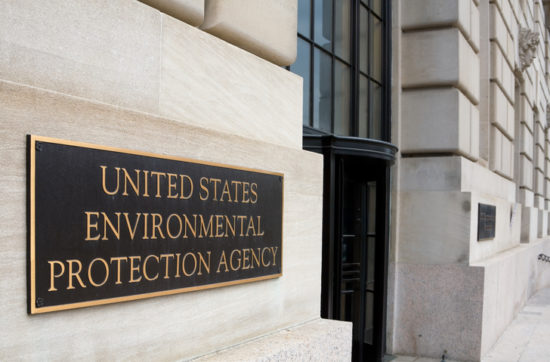
Environmental justice remains a top concern for the Biden Administration. The United States Environmental Protection Agency (U.S. EPA) recently highlighted in its 2022-2026 Strategic Plan (Strategic Plan) that it intends to enhance use of the Civil Rights Act of 1964 to “embed environmental justice and civil rights in the Agency’s core work” and to “strengthen civil rights enforcement in communities overburdened by pollution.”
Shareholder Files Derivative Suit Targeting Company Executives for Greenwashing
Last week, a shareholder of Danimer Scientific, Inc., filed a derivative suit against the company’s executives and board members, alleging that overstated sustainability claims led to millions of dollars in market capitalization losses.
Danimer manufactures polymers, resins, and plastic alternatives that are used in a number of plastic products. The complaint alleges that the company
Prop 65 Regulatory Update for the Food & Cannabis Industry: OEHHA Proposes Specialized Warnings for Exposures to Acrylamide from Food & Exposures to Smoke from Cannabis/THC Products
Food has become a bigger and bigger target for enforcement under Prop 65 over the last few years, and acrylamide in particular has been the subject of scrutiny by both the California Office of Environmental Health Hazard Assessment (OEHHA) and in pending litigation. You can find our prior post on this subject here.
Now, OEHHA has proposed a new tailored warning for exposures to acrylamide from food. The tailored warning would read:
This rulemaking proposes to add the following new subsection to Section 25607.2:
(b) A warning for food exposures to acrylamide meets the requirements of this subarticle if it is provided: (i) in accordance with subsection (a), or, (ii) via one or more of the methods specified in Section 25607.1 and includes both elements (1) and (2) below.
(1) The words “CALIFORNIA WARNING:” in all capital letters and bold print.
(2) The words, “Consuming this product can expose you to acrylamide, a probable human carcinogen formed in some foods during cooking or processing at high temperatures. Many factors affect your cancer risk, including the frequency and amount of the chemical consumed. For more information including ways to reduce your exposure, see www.P65Warnings.ca.gov/acrylamide.”