
In a published opinion filed January 14, 2026, the Third District Court of Appeal affirmed the Sacramento County Superior Court’s judgment denying the City of Vallejo’s (“Vallejo”) writ petition challenging the City of American Canyon’s (“American Canyon”) EIR certification for and approval of the Giovannioni Logistics Project, a 2.4 million square foot warehouse complex on a 208-acre tract of undeveloped, industrially zoned land in American Canyon (the “Project”). City of Vallejo v. City of American Canyon (Buzz Oates LLC, et al., Real Parties in Interest) (2026) 117 Cal.App.5th 1112. The Court rejected appellant Vallejo’s arguments that the Project EIR violated the water supply disclosure requirements of CEQA and its Guidelines, and also the provisions of Water Code sections 10910 and 10911.
Employee Exposure Records and Medical Records: Avoiding OSHA Citations and Defending Against Future Workers’ Compensation, Tort, and ADA Claims
Seyfarth Synopsis: Employers often fail to appreciate the ramifications of industrial hygiene data and medical records. Even non-detect records must be maintained for 30+ years and provided to employees or representatives upon request.
OSHA’s Access to Employee Exposure and Medical Records standard, 29 CFR § 1910.1020, is one of the most frequently misunderstood — and
Agricultural Law Weekly Review—January 27, 2026
Today Jan. 27 at Noon: Quarterly Dairy Legal Webinar: Standards of Identity—Regulations and Current Issues (Free Attorney CLE)
Local Agricultural Policy: PA Agriculture Innovation Grant Program Requirements Published, Applications Open February 2, 2026
On January 24, 2026, the Pennsylvania Department of Agriculture (PDA) published in the Pennsylvania Bulletin a notice (56 Pa.B. 487)
UPDATED: Court Lifts Stop-Work Orders for Three Paused Offshore Wind Projects

During the week of Jan. 12, 2026, three federal judges granted preliminary injunctions in three separate cases filed by offshore wind developers challenging a Dec. 22, 2025, stop-work order that the Bureau of Ocean Energy Management (BOEM) issued to all five offshore wind projects under construction in federal waters: Revolution Wind, offshore New England; Sunrise
The Fifth Circuit Defines “Limited Partner” for Purposes of the 1402(a)(13) Exception to Self-Employment Tax
Overview of the Fifth Circuit’s Decision
The United States Court of Appeals for the Fifth Circuit (“Fifth Circuit”) handed certain partners in limited partnerships within its jurisdiction a huge win regarding self-employment tax. In Sirius Solutions, L.L.L.P. v. Commissioner,[1] a divided Court of Appeals held that a limited partner for purposes of the
Marijuana Rescheduling: Should Employers Update Their Drug Testing Policies and Practices?
By: Adam R. Young, Jennifer L. Mora, and Frederick T. Smith
Seyfarth Synopsis: President Trump’s December 2025 Executive Order signals a possible shift in federal marijuana policy, but many employers still have a lawful and legitimate basis to prohibit impairment at work. Employers that test for marijuana should continue to monitor legal
‘A New Vision for Water’ – Defra’s White Paper and Other January 2026 Developments
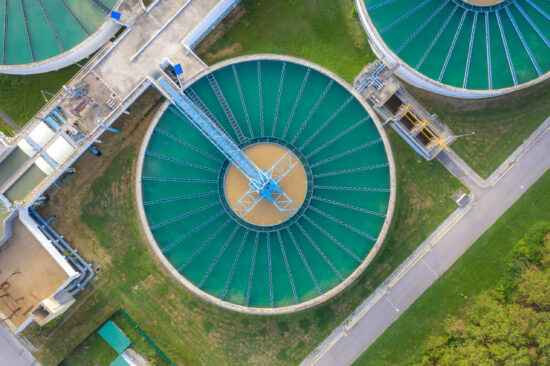
It has been a busy start to the new year for water law and policy with various developments published in the last couple of weeks. Following the release in December 2025 of the Environmental Improvement Plan (EIP), which lists a number of commitments on water, Defra published a long awaited Water White Paper this week
Business and Human Rights: Norwegian NCP issues Final Statement on Telenor
The Norwegian National Contact Point (“NCP”) issued its Final Statement on 11 December 2025 regarding a complaint filed by SOMO on behalf of 474 Myanmar-based civil society organisations (“CSO”) against Telenor ASA (“Telenor”) concerning Telenor’s operations and exit from Myanmar following the February 2021 military coup. The NCP concluded that Telenor did not conduct ongoing human rights due diligence commensurate with
Agricultural Law Weekly Review—January 20, 2026
Register Now! Educational programming for January:
Wed. Jan. 21, AgWorks: Wage and Hour Laws—Requirements and Exemptions
Fri. Jan. 23, Understanding the Basics of Pennsylvania’s Seasonal Farm Labor Law (Atty CLE)
Tues. Jan. 27, Quarterly Dairy Legal Webinar: Standards of Identity—Regulations & Current Issues (Atty CLE)
Pesticides/Herbicides: U.S. Supreme Court Grants Certiorari to FIFRA Preemption Case
EPA’s Proposed CWA 401 Rule Narrows Scope of State Reviews, Reins in Timelines
On January 15, 2026, the Environmental Protection Agency (EPA) published the long-awaited proposed rule Updating the Water Quality Certification Regulations (Proposed Rule), which, if adopted, would largely reinstate the previous Trump administration’s 2020 Clean Water Act Section 401 Certification Rule (2020 Rule). EPA’s proposal seeks to limit the scope of state-issued water quality certifications (WQCs) under Section 401 of the Clean Water Act (CWA) to water quality impacts associated with discharges authorized by federal agency actions. The Proposed Rule also addresses concerns raised by applicants for federal licenses and permits (including for hydroelectric projects, natural gas pipelines, and other energy and infrastructure projects) that certain states have overstepped their Section 401 authority to impose onerous terms and conditions unrelated to water quality and artificially extended the statutory time limits for issuing WQCs.