Mayer Brown

Mayer Brown is uniquely positioned to advise the world’s leading companies and financial institutions on their most complex deals and disputes. With extensive reach across four continents, we are the only integrated law firm in the world with approximately 200 lawyers in each of the world’s three largest financial centers—New York, London and Hong Kong—the backbone of the global economy. We have deep experience in high-stakes litigation and complex transactions across industry sectors, including our signature strength, the global financial services industry. Our diverse teams of lawyers are recognized by our clients as strategic partners with deep commercial instincts and a commitment to creatively anticipating their needs and delivering excellence in everything we do. Our “one-firm” culture—seamless and integrated across all practices and regions—ensures that our clients receive the best of our knowledge and experience.

Latest from Mayer Brown - Page 10

On October 24, 2023, the US federal banking regulators finalized interagency principles for the effective management and supervision of climate-related financial risks (the “Climate Principles”).1 The Climate Principles are targeted at larger banking organizations and are intended to convey consistent supervisory expectations regarding how climate-related financial risks should be managed.

The US federal banking
The Brazilian Securities Commission (“CVM”) made a significant announcement on October 20, 2023, by introducing CVM’s Rule No. 193. This resolution provides comprehensive guidance on the creation and dissemination of sustainability information reports, specifically the IFRS S1 and IFRS S2, as outlined by the International Sustainability Standards Board (“ISSB”), which are aligned with the

On 27 September 2023, Brazil’s Supreme Court concluded the trial of Extraordinary Appeal No. 1,017,365, which discussed a cut-off date for indigenous occupation as a requirement for demarcation of indigenous lands. Based on a strict interpretation of the Brazilian Constitution, the time limit thesis tried to implement a cut-off date to restrict indigenous land claims,

What is a taxonomy anyway?

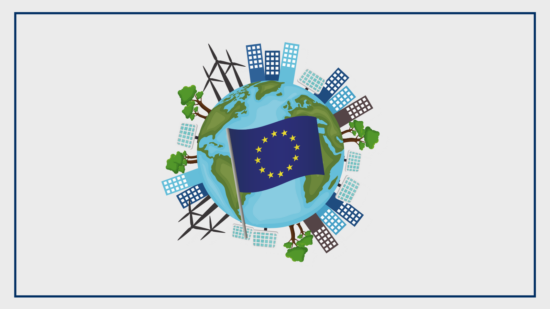
The EU’s “Taxonomy” is a classification framework that determines whether an economic activity is environmentally sustainable.  

Under EU legislation, “large” EU companies will soon need to report on their taxonomy “alignment” as part of their mandatory sustainability disclosures.  This means, at risk of oversimplifying, reporting on the extent to which

Our international ESG team has been keeping an eye on what’s going on with regards to green taxonomies. With so much activity already this year, we summarize some of the key developments below.

EU

We recently published this reminder of the EU’s taxonomy framework. Our publication is particularly relevant to non-EU groups with large subsidiaries

Brazil’s draft Sustainable Taxonomy Action Plan (the Action Plan), prepared by the Ministry of Finance, is currently under public consultation and receiving contributions and comments for its improvement. The deadline for taking part in the public consultation is October 20, 2023.

The development of a sustainable taxonomy seeks to address Brazil’s main environmental and social

On 12 September 2023, Brazil´s Attorney General Office, representing the Brazilian Federal Environmental Agency, filed a climate litigation lawsuit against a livestock farmer, seeking compensation for the deforestation of the Amazon Forest between 2003 and 2016.

This blog post provides a brief overview on this new lawsuit, which further strengthens a new trend for climate

Two new bills have been passed in California as part of a “Climate Accountability Package” that require U.S.-based companies “doing business”[1] in California to make disclosures about their emissions and climate-related financial risks. These are (a) the Climate Corporate Data Accountability Act (California Senate Bill 253 (SB-253)) and (b) the Climate-Related Financial Risk Act