Mayer Brown

Mayer Brown is uniquely positioned to advise the world’s leading companies and financial institutions on their most complex deals and disputes. With extensive reach across four continents, we are the only integrated law firm in the world with approximately 200 lawyers in each of the world’s three largest financial centers—New York, London and Hong Kong—the backbone of the global economy. We have deep experience in high-stakes litigation and complex transactions across industry sectors, including our signature strength, the global financial services industry. Our diverse teams of lawyers are recognized by our clients as strategic partners with deep commercial instincts and a commitment to creatively anticipating their needs and delivering excellence in everything we do. Our “one-firm” culture—seamless and integrated across all practices and regions—ensures that our clients receive the best of our knowledge and experience.

Latest from Mayer Brown - Page 17

By far the largest focus in recent years in terms of ‘responsible investment’ has been on the ‘Environment’ limb of ESG. The UN Principles of Responsible Investment (“PRI”) – an international organisation working to encourage the integration of ESG factors into investment decision making – is now seeking to change this with the launch of
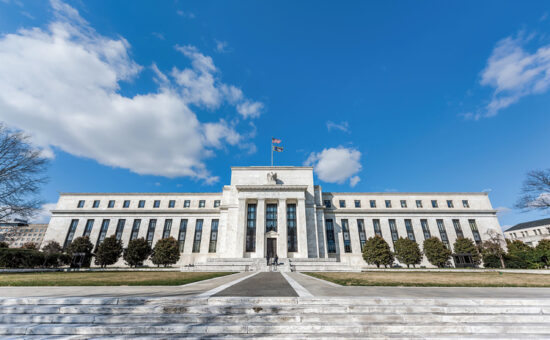

In January 2023, the Board of Governors of the Federal Reserve System released a report that reviews the climate action plans of global systemically important banks (“G-SIBs”) and summarizes the progress they are making toward achieving them (“Climate Action Report”).[1] As discussed below, the Climate Action Report can be an useful tool for banks

Regulators are increasingly mandating companies to make environmental disclosures (see here, here and here).

The CDP – a not-for-profit organisation aiming to encourage the disclosure of environmental risk – has measured and scored the effectiveness of companies’ 2022 environmental disclosures in their latest ‘A List’ Report (the “CDP Report”). The CDP Report shows

On December 23, 2022, the Federal Acquisition Regulatory Council (“FAR Council”) extended its 60-day comment period an additional 30 days from January 13 to February 13, 2023, for its proposed rule on Disclosure of Greenhouse Gas Emissions and Climate-Related Financial Risk. (We previously provided an in-depth analysis on the proposed rule.)

For more information,

On December 27, the Brazilian Presidency issued Provisional Measure No. 1,151/2022, which, among other provisions, amended Laws No. 11,284/2006 (Public Forests Management Act) and 11,516/2007 (ICMBio Creation Act) to enable the development of carbon credit projects and other environmental services in conservation units, through concessions.

Continue reading at Mayerbrown.com.

On 20 December 2022, the Green and Sustainable Finance Cross-Agency Steering Group (the “Steering Group”) co-chaired by the Hong Kong Monetary Authority (“HKMA”) and the Securities and Futures Commission (“SFC”) announced that it has entered into a collaboration arrangement with CDP, an international non-profit organisation that runs the global environmental disclosure system for companies,

On 6 December 2022, the Council of the European Union (the “Council”) and the European Parliament (the “EP”) reached a provisional agreement on a proposal to minimise the risk of deforestation and forest degradation with products that are imported into, or exported from, the EU (the “Agreed Position”). The Agreed Position proposes mandatory due diligence

The 15th meeting of the Conference of the Parties to the United Nations Convention on Biological Diversity (COP15) is taking place in Montreal, Canada, until next Monday (December 19).  It has been attracting much attention due to negotiations on the Post-2020 Global Biodiversity Framework (GBF), which is hoped to be agreed upon in the next

On December 8, 2022, the Basel Committee on Banking Supervision (“BCBS”) released guidance to clarify how climate-related financial risks may be captured in existing capital and liquidity requirements for banking organizations (“Climate FAQs”). The Climate FAQs are noteworthy because they indicate that standard setters believe climate-related financial risks should be included in bank capital requirements and