
 With the 2020 reporting period under the Toxic Substances Control Act (TSCA) Chemical Data Reporting (CDR) rule rapidly approaching, the US Environmental Protection Agency (US EPA) has announced a number of key changes to the information that chemical manufacturers and importers must submit to the agency pursuant to the CDR rule. US EPA also announced
Latest from Squire Patton Boggs - Page 15
US Supreme Court Grapples with Balancing Landowners’ Rights Against CERCLA Authority
 Two months ago, the US Supreme Court heard oral arguments in Atlantic Richfield Co. v. Gregory Christian. The case is critically important to environmental lawyers in the United States because it may alter the operation of Congress’s Comprehensive Environmental Response, Compensation, and Liability Act of 1980 (CERCLA) scheme for environmental remediation. CERCLA gives EPA broad
Have Your Say – Public Consultation on How Western Australia Can Modernise Its Environmental Protection Legislation Now Open
Public consultation is currently open for the Western Australian (WA) government’s proposed amendments to the state’s environmental protection legislation. The proposed changes aim to  modernise the state’s environmental protection legislation to address the new challenges and priorities that have arisen in environmental protection in the 30 years since the Environmental Protection Act 1986 (WA) (EP
California Holds Technical PFAS Seminar to Inform Public of State of Science and Possible Future Drinking Water Regulations
 Last month, the California State Water Resources Control Board (State Board) hosted a comprehensive two-day seminar on per- and polyflouroaklyl substances (PFAS) in California. PFAS are a family of an estimated 4,000-6,300 chemical compounds that have a variety of applications due to their stability in the environment. Although some reports suggest that these chemicals
Groundwater Contaminant Regulation in California: State Water Board Lowers Notification Levels and Announces First Step Towards Developing an MCL for Certain Compounds
 In June of 2018, the California State Water Resources Control Board (State Water Board) Division of Drinking Water (DDW) provided recommendations for PFOA and PFOS notification levels. On July 13, 2018, the State Water Board released guidelines based on DDW’s recommendations for testing and reporting on two PFAS compounds—PFOA and PFOS. The interim notification level
It Has Been A Busy Year For the TSCA Risk Assessment Process
As 2019 moves into its closing months, US EPA activity under the amended Toxic Substances Control Act (TSCA) remains front and center. As part of US EPA’s three-step process of prioritization, risk evaluation and risk management for existing chemicals, as we previously reported, EPA began in 2016 by identifying the first ten chemicals for
US EPA Proposes to Roll Back Requirements to Control Oil & Gas Industry Methane Emissions
 Today, US EPA proposed a rule to roll back the Obama Administration’s rule to control methane emissions from the oil and gas industry. Methane emissions from the oil and gas industry are equivalent to the emissions of one-quarter of all cars in the US, according to US EPA data. Methane emissions are also known to
DC Circuit Upholds US EPA Decision Not to Issue New Financial Assurance Requirements for the Hardrock Mining Industry
 On July 19, 2019, the D.C. Circuit issued its decision in Idaho Conservation League v. Wheeler, upholding US EPA’s decision not to issue financial responsibility requirements for the hardrock mining industry under Section 108(b) of the Comprehensive Environmental Response, Compensation, and Liability Act (CERCLA). The requirements, if adopted, would have cost the hardrock mining
US Supreme Court Affirms Tweaked Auer Deference, But Is It Now a “Paper Tiger”?
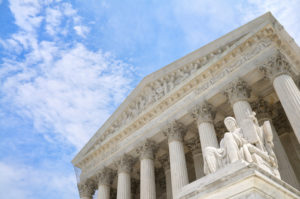 In our prior coverage of Kisor v. Wilkie, we predicted that the Court would impose “greater scrutiny” on “administrative agencies’ . . . interpretation of their regulations.” And the Court did. The Court’s decision will affect every aspect of the federal government’s regulation of environmental, safety, and health.
At the end of its term, the
How Thoroughly do UK Businesses Need to Investigate What Happens to Their Waste After They Have Transferred It?
A recent prosecution by the Environment Agency, where a company was ordered to pay £327,000, has highlighted potentially difficult issues for businesses in complying with the statutory waste duty of care.
What is the Statutory Waste Duty of Care?
All businesses generate waste of some description: from paper and kitchen waste in offices, to hazardous