Eye on ESG

Tracking the Transition to Sustainable Business and Finance

Latest from Eye on ESG - Page 10

What is a taxonomy anyway?

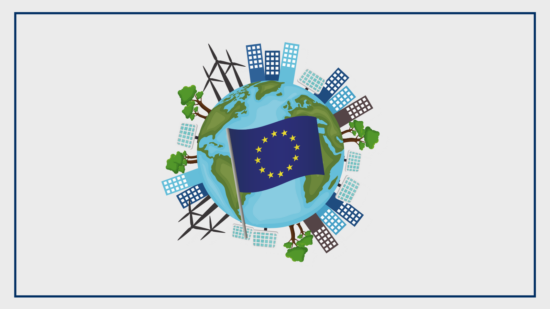
The EU’s “Taxonomy” is a classification framework that determines whether an economic activity is environmentally sustainable.  

Under EU legislation, “large” EU companies will soon need to report on their taxonomy “alignment” as part of their mandatory sustainability disclosures.  This means, at risk of oversimplifying, reporting on the extent to which

Our international ESG team has been keeping an eye on what’s going on with regards to green taxonomies. With so much activity already this year, we summarize some of the key developments below.

EU

We recently published this reminder of the EU’s taxonomy framework. Our publication is particularly relevant to non-EU groups with large subsidiaries

Brazil’s draft Sustainable Taxonomy Action Plan (the Action Plan), prepared by the Ministry of Finance, is currently under public consultation and receiving contributions and comments for its improvement. The deadline for taking part in the public consultation is October 20, 2023.

The development of a sustainable taxonomy seeks to address Brazil’s main environmental and social

On 12 September 2023, Brazil´s Attorney General Office, representing the Brazilian Federal Environmental Agency, filed a climate litigation lawsuit against a livestock farmer, seeking compensation for the deforestation of the Amazon Forest between 2003 and 2016.

This blog post provides a brief overview on this new lawsuit, which further strengthens a new trend for climate

Two new bills have been passed in California as part of a “Climate Accountability Package” that require U.S.-based companies “doing business”[1] in California to make disclosures about their emissions and climate-related financial risks. These are (a) the Climate Corporate Data Accountability Act (California Senate Bill 253 (SB-253)) and (b) the Climate-Related Financial Risk Act

Companies are increasingly recognising that climate risk poses “strategic and operational risk” that could severely impact business operations. On 3 August 2023, United Nations Global Compact released Just Transition in Supply Chains: A Business Brief (the “Brief”).  At the heart of the Brief is a call for businesses to embed the concept of ‘just transition’

On 24 August 2023, through Decree No. 11,666/2023, the Kigali Amendment to the Montreal Protocol on Substances that Deplete the Ozone Layer was enacted in Brazil (the “Amendment”). It was at MOP 28 (Meeting of the Parties) of the Montreal Protocol, in 2016, in the city of Kigali, Rwanda, that the Parties agreed to include

The EU Corporate Sustainability Reporting Directive (“CSRD”) entered into force on 5 January 2023 and the associated European Sustainability Reporting Standards (“ESRS”) were adopted by the European Commission on 31 July 2023. Together, the CSRD and ESRS create detailed sustainability reporting requirements that will apply to a significant number of EU and non-EU companies and