
PFAS-related litigation continues to climb and to diversify as to claims and parties. See the attached graphics, updated through the fourth quarter of 2023. We will continue to update these graphics on a quarterly basis.
Agricultural Law Weekly Review—January 24, 2024
National Agricultural Policy: Continuing Resolution Funds Government, Agriculture Until March 1, 2024
On January 19, 2024, President Joe Biden signed into law continuing resolution H.R.2872, which maintains the funding levels established in the 2023 Consolidated Appropriations Act (P.L. 117–328) for “Agriculture, Rural Development, Food and Drug Administration, and Related Agencies” and other
OSHA Promotes Safe Work for Young Workers

By A. Scott Hecker, Adam R. Young, and Craig B. Simonsen
Seyfarth Synopsis: This week, OSHA is promoting safe workplaces for young adults and working teenagers.
According to OSHA, employers must follow all OSHA safety and health standards to prevent their employees from being injured or becoming ill on the job. Workers under
EPA Grants Louisiana Primacy Over its Class VI Injection Wells

On January 5, 2024, EPA approved Louisiana’s application to administer the Class VI underground injection control program (UIC). 89 Fed. Reg. 703. Class VI wells are used to inject carbon dioxide into deep geological formations for long-term underground storage. This technology is a promising tool for reducing carbon dioxide emissions to the atmosphere.
EPA’s grant of “primacy” to Louisiana for the Class VI program will allow the state’s Department of Natural Resources to issue UIC permits for Class VI wells, and to ensure compliance with the program. Louisiana submitted its application for Class VI primacy on September 17, 2021. It becomes the third state with primacy over Class VI wells, joining North Dakota (granted primacy in 2018) and Wyoming (2020). Louisiana is the first state to receive primacy over Class VI wells during the Biden administration. Several other states—including Texas, West Virginia, and Arizona, according to the EPA’s website—currently are seeking primacy.
Shale Law Weekly Review—Week of January 22, 2024
Infrastructure: $625 Million in Grants Announced to Expand Electric Vehicle Charging Infrastructure
On January 11, 2024, the Department of Energy Office (DOE) of Energy Efficiency and Renewable Energy (EERE) announced $625 million in grants to expand the infrastructure of charging capabilities for electronic vehicles. These grants are provided through the Charging and Fueling Infrastructure (CFI)
Recent Progress Report Issued by EPA Foreshadows Landmark Year for Federal Regulation of PFAS
Soon after the Biden Administration took office, the United States Environmental Protection Agency (“EPA”) issued a Strategic Roadmap highlighting the many ways it planned to “research, restrict, and remediate” per-and poly-fluoroalkyl substances (“PFAS”) during the Administration’s first term. Among the most significant objectives of the “restrict” and “remediate” portions of the Roadmap were plans to
EPA’s Recent Proposed Restrictions on Chemicals Set the Stage for Future of Chemical Risk Management
In 2022 and 2023, the United States Environmental Protection Agency (EPA) proposed five risk management rules under Section 6(a) of the Toxic Substances Control Act (TSCA) imposing restrictions and bans on chemical uses. This is the first group of risk management rules that EPA has published since Congress amended TSCA in 2016, establishing EPA’s process to address “unreasonable risks” identified for certain uses of existing chemicals. These proposed rules provide a roadmap for EPA’s approach to chemical regulation under Section 6(a), establishing the precedent for future regulation.
Companies should anticipate more proposed bans, especially for consumer uses of a chemical, along with significantly lower chemical exposure limits compared to occupational exposure limits. Rigorous workplace requirements, including exposure monitoring, respiratory protection and additional personal protective equipment (PPE) requirements are also expected. And, the absence of industry data on a chemical’s use may lead to more stringent proposed regulation.
Does evian Water Greenwash?
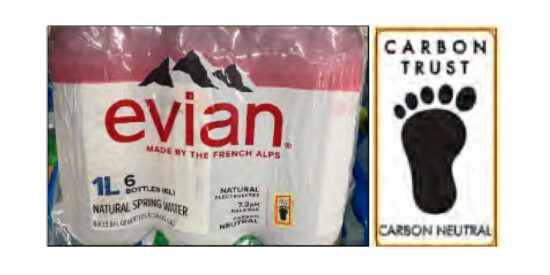
The Court found consumers’ general confusion about “carbon neutral” demonstrates that the term has a reasonable likelihood to deceive.
Trial Court Upholds City’s Discretion Regarding Whether Resources Qualify as Tribal Cultural Resources; AB 52 Consultation Not Required with Tribe that Failed to Timely Request Consultation

In Koi Nation of Northern California v. City of Clearlake, the Lake County Superior Court (in a judgment dated December 22, 2023) upheld the City of Clearlake’s (“City”) determination, under the substantial evidence standard, that resources not listed on a historic register failed to qualify as tribal cultural resources (“TCR”). The Court also held
Downey Brand Victory: Filing Multiple NODs does not Restart Statute of Limitations

In Guerrero et al v. City of Los Angeles (January 17, 2024, No. B326033 c/w B327032) ___Cal.App.5th___, the Second District Court of Appeal held that the project opponents did not timely file their CEQA lawsuit. The published opinion reverses a trial court decision that had found the lawsuit to be timely and concluded that environmental