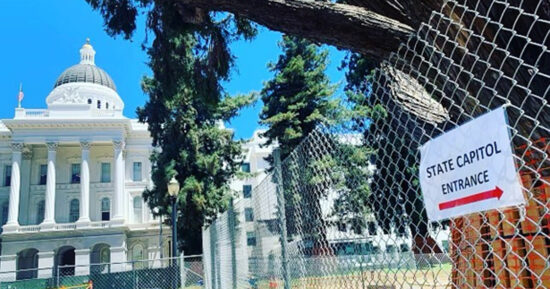
In Save Our Capitol! v. Department of General Services (Jan. 18, 2023, C096617, C096637) __Cal.App.5th__, the Third District Court of Appeal held that the Department of General Services violated CEQA when certain design changes to the State Capitol renovation (Project) were not revealed until the final EIR (FEIR), preventing the public from commenting on the


In the closing weeks of 2022, the California Air Resources Board (“CARB” or “Board”) approved its final 2022 Scoping Plan, which sets forth a detailed roadmap to accelerate the reduction of greenhouse gas (“GHG”) emissions in order for the state to achieve carbon neutrality by 2045, with an interim goal of achieving a reduction in GHG emissions of 40% below the 1990 level by 2030 (the goal adopted by the State in 2017’s SB 32).

Congress, the media, and the public have given significant attention to remarks this week by a commissioner of the Consumer Product Safety Commission (“CPSC”) indicating that the agency would be considering a federal ban on gas stoves due to their health effects.  The suggestion of a ban on gas stoves has drawn comments from bipartisan policymakers in both chambers, and even the White House has weighed in against the prospect of a potential ban.

The CPSC is unlikely to ban gas stoves in the near future, although it has the authority to ban unreasonably dangerous products that cannot be made safe, and has done so with toxic substances in children’s products and other product categories in the past.   A CPSC rulemaking on mandatory safety standards for gas stoves, however, is a possibility, and that process may drive the establishment of voluntary industry standards by a standards-setting body.  Additionally, other federal and state regulators have recently sharpened their focus on indoor air quality and gas-powered appliances, for both health and environmental reasons.  The Environmental Protection Agency (“EPA”), for instance, is undertaking several activities related to indoor air quality.  And the California Air Resources Board (“CARB”) recently adopted a plan that would effectively prohibit the sale of gas-powered space and water heaters in California by 2030.

Particularly with regard to federal regulatory activity on gas stoves and other gas-powered appliances, potentially affected parties will have ample opportunities to help shape the outcome of any mandatory or voluntary product standards put in place or accepted by the CPSC, and to engage with other regulators.  This alert provides an overview of recent and emerging legislative and regulatory activity related to indoor air pollution, focusing particularly on activity by the CPSC and EPA.  Companies—both those with interests in gas stoves and those concerned with indoor air quality issues more broadly—should carefully follow indoor air quality developments, including in their interactions with regulators, given the increased focus on this area.

On January 12, 2023, the U.S. Department of the Interior’s (DOI) Bureau of Energy Management (BOEM) announced the signature of a Notice of Proposed Rulemaking (NOPR) addressing the regulations governing wind energy development on the Outer Continental Shelf (OCS). As BOEM notes in the NOPR, the first OCS renewable energy regulations were promulgated in 2009 by the Minerals Management Service, the predecessor to BOEM.  Through the NOPR, BOEM intends to modernize its regulations by implementing reforms identified by the agency and recommended by stakeholders since 2010, when BOEM was established. 

Yesterday, the US Environmental Protection Agency (EPA) and the US Army Corps of Engineers (Corps) (together, the Agencies) published a final rule revising the definition of “waters of the United States” (WOTUS) subject to federal regulation and permitting requirements under the Clean Water Act (CWA).  This rule is the latest attempt by the Agencies to craft a durable rule defining WOTUS.  The new rule, which largely mirrors the 2021 proposal, asserts a broader geographic scope of federal jurisdiction than the 2020 Navigable Waters Protection Rule (NWPR).  In particular, the Agencies adopt the broadest possible interpretation of the Supreme Court’s decision in Rapanos (through incorporation of both the plurality’s “relatively permanent” test and Justice Kennedy’s “significant nexus” test).  The final rule would, for the first time, codify aspects of the Agencies’ 2008 Rapanos Guidance and would rely on the significant nexus test’s case-by-case approach for evaluating jurisdiction for tributaries, wetlands, and other waters.  The Agencies released the final rule while the Supreme Court considers the scope of CWA authority over a major category of WOTUS, “adjacent wetlands,” in Sackett v. EPA, and the Supreme Court could hand down a decision in the coming months that could require changes to the rule.

On January 12, 2023, the US Environmental Protection Agency (“EPA”) published its proposed National Enforcement and Compliance Initiatives (“NECIs”), soliciting public comment on the Agency’s potential Initiatives for fiscal years 2024 through 2027. These NECIs will guide EPA’s Office of Enforcement and Compliance Assurance (“OECA”) in its enforcement efforts over the next four years by focusing resources on “serious and widespread environmental problems where federal enforcement can make a difference.” Unsurprisingly, the identified NECIs build off EPA’s FY2022 Enforcement Results (on which we recently reported) and reflect OECA’s overarching goal: “to protect human health and the environment by holding polluters accountable and compelling regulated entities to return to compliance.”

Continuing the trend toward protecting environmental justice communities, New York Gov. Hochul is expected to sign a chapter amendment to a recently passed bill that would have established new standards under the State Environmental Quality Review Act (SEQRA) – New York’s “Little NEPA” environmental review statute. The bill would also have changed the procedures employed

On January 6, 2023, the U.S. Environmental Protection Agency (EPA) released a pre-publication copy of a Proposed Rule, which will lower the annual National Ambient Air Quality Standard (NAAQS) for fine particulate matter (PM2.5). PM2.5 refers to PM with a diameter of 2.5 microns or less, which is about 3-5 percent of the width