
After more than a year of work, MassDEP has proposed regulations that would require applicants to perform cumulative impact analysis prior to issuance of certain air emissions permits. The regulations were required by the environmental justice provisions of the 2021 Climate Roadmap Act.
The requirement to perform a CIA will apply to any person

COVID-19 Healthcare Permanent Standard Remains Under White House Review

By A. Scott Hecker, Adam R. Young, Patrick D. Joyce, James L. Curtis, and Craig B. Simonsen
Seyfarth Synopsis: On December 7, 2022, OSHA submitted its permanent “Occupational Exposure to COVID-19 in Healthcare Settings” standard to the White House Office of Management and Budget’s Office of Information and Regulatory Affairs (“OIRA”) for
2023 Air Quality and Climate Regulation Watch List
2022 was a busy year for air quality and climate change policy, and 2023 promises to be no different. See below for a list of high-profile actions expected from EPA this year, along with a few you might not have on your radar screen.
EPA and the Corps Promulgate a “Durable” WOTUS Rule — Proving Only That There Is a Difference Between Hope and Expectation
Last week, EPA and the Army Corps finally published their long-awaited rule defining “Waters of the United States.” Will the WOTUS rule finally provide the clarity for which we have been waiting, allowing the rule to be as “durable” as the agencies claim, or will it instead be dead on arrival, made irrelevant by the
2022 Air Quality and Climate Highlights
Need a refresher on key developments in 2022 to prepare you for what’s next in 2023? Here’s a rundown of some high-profile happenings, along with some you might have missed.
Thomas Brill Quoted in Law360 Article, ‘California Legislation And Regulation To Watch In 2023’
Thomas R. Brill, a member of GT’s Energy & Natural Resources Practice, was quoted in a Law360 article titled “California Legislation And Regulation To Watch In 2023.”
Click here to read the full Law360 article. (subscription required)
When CEQA Litigation Turns Tortious: First District Affirms Order Denying Anti-SLAPP Motion, Allows Malicious Prosecution Action To Proceed Against Counsel Who Brought Unsuccessful CEQA Challenge To Single-Home Project
While CEQA is a complicated area of law, often criticized as a “plaintiff’s sandbox,” CEQA litigation is not a “free-for-all” immune from malicious prosecution actions when it is unsuccessfully pursued with malice and without probable cause. Such is the teaching of the First District Court of Appeal’s December 28, 2022 published opinion in Charles Jenkins et al v. Susan Brandt-Hawley et al (1st Dist., Div. 2, 2022) 86 Cal.App.5th 1357, which affirmed the trial court’s order denying an anti-SLAPP motion and allowing a malicious prosecution action to proceed against a prominent CEQA attorney and her law firm.
EPA Guidance Empowers States to Reduce PFAS Contamination through NPDES Programs
Following up on the United States Environmental Protection Agency (EPA) September 6th publication of a proposed rule to designate Perfluorooctanoic Acid (PFOA) and Perfluorooctanesulfonic Acid (PFOS)(collectively known as, PFAS) as hazardous substances under the Comprehensive Environmental Response, Compensation, and Liability Act (CERCLA), on December 6th EPA issued guidance on how states can utilize National Pollutant
Louisiana Public Service Commission – Electric Utility Regulation – Recent and Current Topics
The following is prepared by the Kean Miller LLP Utilities Regulation team on important topics affecting consumers of electrical power in Louisiana related to recent and current proceedings of the Louisiana Public Service Commission (“LPSC”).
LPSC Rulemaking on Customer-Centered Options: The LPSC has a proceeding underway to research and evaluate customer-centered options. In the proceeding,
EPA’s Methane ‘Super-Emitter’ Proposal: Getting Outside Help
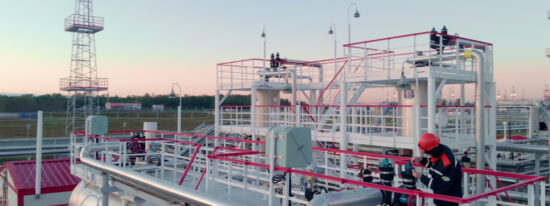
Earlier this month, the Environmental Protection Agency (EPA) published a “supplemental notice of proposed rulemaking,” calling for comments on air pollution standards for control of methane emissions from new and existing facilities in the oil and natural gas industry. See 87 Fed. Reg. 74,702 (Dec. 6, 2022). Among those standards are specific rules concerning “super-emitter”