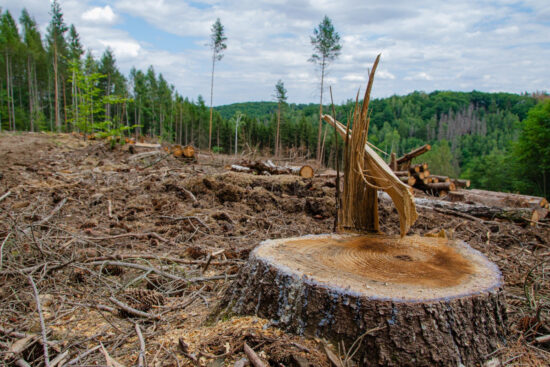
On 6 December 2022, the Council of the European Union (the “Council“) and the European Parliament (the “EP“) reached a provisional agreement on a proposal to minimise the risk of deforestation and forest degradation with products that are imported into, or exported from, the EU (the “Agreed Position“). The

On December 16, 2022, from 12 noon – 1:00 ET, the Penn State Center for Agricultural and Shale Law, alongside the Pennsylvania Department of Agriculture’s Agricultural Business Development Center presented this webinar on direct agricultural product sales as part of our ongoing educational series, “Understanding Agricultural Law.” This session in our series is entitled, “Understanding

The plan accelerates already ambitious climate goals for California and charts a course to carbon neutrality by 2045.

By Joshua Bledsoe, Jen Garlock, and Brian McCall

On December 15, 2022, the California Air Resources Board (CARB) adopted its Final 2022 Scoping Plan for Achieving Carbon Neutrality (Final Scoping Plan). Assembly Bill (AB) 32 requires CARB to develop and update every five years a scoping plan that describes the approach California will take to reduce greenhouse gas emissions (GHGs) to combat climate change. AB 32 originally set a target of reducing emissions to 1990 levels by 2020. After California met this goal, Senate Bill (SB) 32 strengthened the state’s GHG reduction target to at least 40% below 1990 levels by 2030. California committed to even greater targets this year with adoption of AB 1279, which directs the state to become carbon neutral no later than 2045.

On August 16, 2022, President Biden signed the Inflation Reduction Act (IRA) into law, directing a record $370 billion toward clean energy investments.

Yesterday, the White House released a 182-page guidebook to the IRA entitled Building a Clean Economy.  John Podesta, Senior Advisor to the President for Clean Energy Innovation and Implementation, explains in

By Paul A. Davies, Michael D. Green, and James Bee

The CBAM would seek to mitigate carbon leakage through the imposition of a levy on carbon-intensive imports into the EU, while free allowances under EU ETS would be phased out.

On 13 December 2022, negotiators from the European Parliament and European Council reached a provisional and conditional agreement on the terms of the EU’s carbon border adjustment mechanism (CBAM).

The CBAM was initially proposed by the European Commission in July 2021 as part of its “Fit for 55” package of policies. The measure seeks to address and mitigate the risk of “carbon leakage” from the EU, which refers to the risk that the EU’s greenhouse gas reduction efforts will be offset by increasing emissions outside of its border through the relocation of production to non-EU countries with less ambitious emissions reduction policies.

The CBAM would impose a levy on in-scope goods that are imported into the EU. Importers of such goods would be required to pay an amount equal to the cost of the emissions allowances under the EU Emissions Trading System (ETS) that would have been necessary to pay to produce that good in the EU.

On December 14, 2022, during an open Commission meeting, the Federal Trade Commission voted unanimously to issue a Federal Register notice requesting comments on the efficacy of the Green Guides.  The initial request for comments seeks input on whether to retain, modify, or rescind the Guides.  The notice was published in late December, marking the beginning of a 60-day comment period that ends on February 21, 2023.

On December 14, 2022, the Center for Agricultural and Shale Law conducted another presentation in our ongoing series for specialty crop producers: Legal Planning for Specialty Crop Producers: Understanding Liability Protections, Regulatory Processes, and Other Legal Risks. These presentations are part of a multi-part 2022 educational series to assist Pennsylvania specialty crop producers successfully augment