The U.S. Fish and Wildlife Service (the “Service”) published a proposed rule listing the tricolored bat as an endangered species under the Endangered Species Act (“ESA”). The tricolored bat occurs in portions of 39 states, including Texas, Iowa, and Oklahoma, which contain a significant concentration of utility-scale wind projects. In combination with the Service’s proposed “endangered” designation for the northern long-eared bat, the new proposed rule could complicate wind energy project permitting across the country.

As we noted in a prior post, the California Office of Environmental Health Hazard Assessment (OEHHA) proposed tailored Prop 65 safe harbor warnings for THC and marijuana smoke, following listing THC for reproductive harm and marijuana smoke as cancer-causing in January 2020 (marijuana smoke was already listed for reproductive harm as of 2009). After considerable public comment and a published final statement of reasons addressing those comments, OEHHA announced on August 8, 2022 that it had approved amendments to the new tailored warnings.

In County of Butte v. Dep’t of Wat. Resources (2022) 13 Cal.5th 612, issued on August 1, 2022, the California Supreme Court carved out a role for the California Environmental Quality Act (“CEQA”) even where the project is largely governed by a federal proceeding.  The case arose in connection with the relicensing of the Oroville Dam by the Federal Energy Regulatory Commission (“FERC”).  The Federal Power Act (“FPA”) (16 U.S.C. § 791, et seq.) delegates to FERC the authority to license hydroelectric dams; the FPA has “a significant preemptive sweep.”  Despite a comprehensive federal process for licensing dams, the Supreme Court held that state agency review under CEQA was not entirely preempted.  As significant as the ruling itself is the strident dissent, penned by outgoing Chief Justice Cantil-Sakauye.

The 19th Judicial District Court in Baton Rouge, Louisiana issued a decision on September 14, 2022, vacating a proposed industrial facility’s permit issued by the Louisiana Department of Environmental Quality (“LDEQ”) and finding that LDEQ violated the federal Clean Air Act and its duty under the Public Trust Doctrine.[1] Although the decision concerns permitting

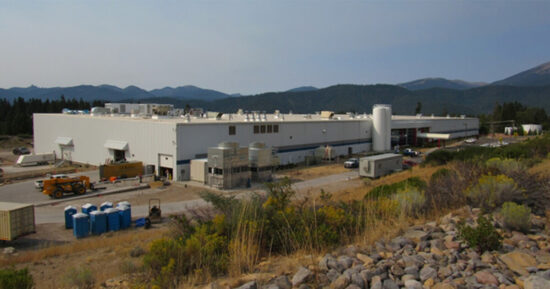
On April 20, 2022, the Third District Court of Appeal filed its opinion in We Advocate Through Environmental Review v. County of Siskiyou (2022) 78 Cal.App.5th 683, reversing the trial court’s judgment upholding the County’s Environmental Impact Report (“EIR”) for a water bottling facility. The court held that (1) the County’s EIR for the botting

The Department of Commerce (DOC) has issued the final rule implementing the two-year moratorium on anti-dumping or countervailing duties (AD/CVD) for solar panels and cells from Cambodia, Malaysia, Thailand, and Vietnam in accordance with the June 6, 2022, Presidential Proclamation, which provided for the two year moratorium on those tariffs.

Continue reading the full GT

On May 11, 2022, the Third District Court of Appeal published its opinion in We Advocate Through Environmental Review v. City of Mount Shasta (2022) 78 Cal.App.5th 629, reversing the decision below and ordering the trial court to grant a petition for writ of mandate, specifying actions under CEQA that the City of Mt. Shasta