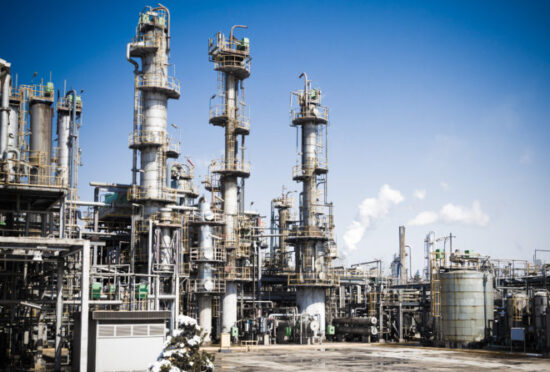
On July 28, 2022, the US Environmental Protection Agency (EPA)  published the 2021 Toxics Release Inventory (TRI) preliminary dataset that provides public access to data about chemical releases, waste management, and pollution prevention activities that took place in calendar year 2021 at more than 20,000 federal and industrial facilities across the country. The 2021 preliminary dataset, which for the second year includes reporting on per- and polyfluoroalkyl substances (PFAS) added to the TRI by the 2020 National Defense Authorization Act (NDAA), has not yet undergone the complete TRI data quality process. EPA plans to publish the quality-checked dataset in October 2022, at which time it will be the basis for the 2021 TRI National Analysis interpreting the information and examining trends that is expected to be published in early 2023. Companies should bear in mind that information collected under the TRI program can be used not only to inform regulatory action, but also as a basis for enforcement by EPA and citizen suits.

The Inflation Reduction Act of 2022 (the “IRA”) features $260 billion in clean-energy tax credits. While the IRA extends many existing clean-energy tax credits, like the energy production tax credit and investment tax credit for wind and solar, it also establishes new credits, including credits for advanced manufacturing and hydrogen production. Additionally, beginning in 2025, taxpayers with zero emissions facilities would have added flexibility to choose between using a new technology neutral production tax credit or investment tax credit.

One of the Inflation Reduction Act’s (IRA) notable features is the creation of a Greenhouse Gas Reduction Fund (GGRF).  This fund could create a mechanism to quickly disburse up to $27 billion to clean energy technologies, without undergoing the sometimes laborious reviews required by the National Environmental Policy Act (NEPA).  IRA § 60103. 

The Inflation Reduction Act (IRA) would make significant strides in limiting and cutting methane pollution. Methane has proven to be a significant part of the climate problem; the United Nations’ Environment Programme (UNEP) notes that over a 20-year period, methane is 80 times more potent at warming than carbon dioxide.  Studies by the National Oceanic and Atmospheric Administration (NOAA) further show that the rate of methane emissions is only worsening, with 2020 recording the largest annual increase since 1983.  By implementing a Methane Emissions Reduction Program, the IRA takes a significant step towards reducing methane-related warming.  This program implements a carrot-and-stick regulatory regime, whereby the Environmental Protection Agency (EPA) rewards methane reduction efforts with financial assistance, and penalizes excess methane waste with a set fee.

The environmental justice provisions included in the Inflation Reduction Act of 2022 (“IRA”) continue the Biden Administration’s commitment to environmental justice.  The administration has already demonstrated a consistent desire to build environmental justice into its programs through programs such as the Justice40 Initiative.  This initiative directs 40% of the climate change, sustainability, and other

The Louisiana Public Works Act (“LPWA”), La. R.S. 38:2241, et seq., protects the rights of contractors and others relating to the construction of public works projects for the state, any of its boards, agencies, and political subdivisions. August 1, 2022 not only marks the beginning of the end of summer 2022, but also the

The transportation sector constitutes the largest source of greenhouse gas emissions in the United States, and the Inflation Reduction Act (IRA) takes significant steps to transition the U.S. vehicle fleet to zero-emissions technology.  The proposed legislation takes a multi-faceted approach in doing so: it not only provides incentives for increased consumer use of electric vehicles, it also promotes domestic zero-emissions vehicle manufacturing. 

If enacted in the coming days, the recently announced Inflation Reduction Act (IRA) could be the most significant step the U.S. has taken to mitigate the worst effects of climate change.  In a joint statement, Senators Joe Manchin and Majority Leader Charles Schumer claimed the IRA would “fight inflation, invest in domestic energy production and manufacturing, and reduce carbon emissions by roughly 40 percent by 2030.”  The IRA’s primary mechanism for achieving this goal is the allocation of $369 billion to support energy production and reduce greenhouse gas emissions.