
Earlier this month, the Environmental Protection Agency (EPA) published in the federal register its notice of availability to comment on its Draft Recommended Aquatic Life Ambient Water Quality Criteria for Perfluorooctanoic acid (PFOA) and Draft Recommended Aquatic Life Ambient Water Quality Criteria for Perfluorooctane Sulfonic Acid (PFOS).
PFOA and PFOS are both fluorinated organic
Federal Court Finds Tort Claims Preempted by CERCLA Consent Decree

A recent federal district court decision shows how a consent decree can provide protection to responsible parties under CERCLA by precluding later-filed tort claims seeking additional relief or different remedial action.
Law.com Recognizes Steven C. Russo as ALM Litigator of the Week First Runner-Up

Congratulations to Steven C. Russo and the GT team who were named with Gibson, Dunn & Crutcher, and Pillsbury Winthrop Shaw Pittman as ALM Litigator of the Week First Runner Up! Read more about their recognition and work obtaining a temporary restraining order barring the town of East Hampton, New York from moving forward with
Federal Trade Commission Petitioned To Investigate Electric Utilities

On May 18, a coalition of 235 consumer, environmental, and public interest groups penned a petition urging the Federal Trade Commission (“FTC”) to investigate alleged anticompetitive business practices undertaken by electric utilities, pursuant to Article 6(b) of the FTC Act, which empowers the agency to conduct a broad investigative study and request information. Sec. 6(b), 15 U.S.C. § 46(b).
USEPA’s National PFAS Datasets Compile and Integrate State and Federal Data, but Gaps Remain
The US Environmental Protection Agency (USEPA) has made available a collection of National PFAS Datasets, which collects a variety of PFAS data from different state and federal sources on one convenient webpage. Note that, for datasets for which USEPA was not involved in the collection of data and cannot vouch for its accuracy or
Human Rights and the Environment – What non-EU-based companies need to know regarding the EU draft Corporate Sustainability Due Diligence Directive

On 23 February 2022, the European Commission published its much-anticipated draft corporate sustainability and due diligence directive (the “Draft Directive”). The Draft Directive sets out a proposed EU standard for human rights and environmental due diligence (“HREDD”) which, importantly, would apply to any non-EU-based company and its subsidiaries if those group companies have aggregate annual net turnover in the EU of:
- more than EUR 150 million (Group 1); or
- more than EUR 40 million with at least 50% of net worldwide turnover generated in a “high-risk” sector which includes textiles, clothing and footwear, agriculture, forestry, fisheries, food & extractives (Group 2).
Notably, the HREDD applies even if a company and its subsidiaries do not have a physical presence in the EU, if the above net turnover threshold is met.
The Draft Directive requires both Group 1 and Group 2 companies to take appropriate measures to identify, and mitigate, actual and potential adverse human rights and environmental impacts arising from their own operations anywhere in the world (not just in the EU) and, where related to their value chains, from their “established business relationships”.
Colleagues from our offices throughout the world have prepared briefings which are specific to particular locations, giving insights into related matters in those jurisdictions.
New standard published for Greenhouse Gas Emissions reporting in Private Equity

Emissions reporting standards and practices in the private equity sector have been described by certain commentators as being some way behind those in the public markets; certainly the private equity asset class has, so far, received less attention in the context of Environmental, Social and Governance (ESG)-related reporting developments more generally. That is changing, however; General Partners (“GPs“) are increasingly called upon to disclose climate-related data and establish greenhouse gas (“GHG“) emissions reduction targets across their portfolios.
There is not, at present, an agreed standard for reporting such information at a fund level, which has resulted in inconsistent approaches being adopted by different funds. Inconsistencies, of course, potentially impair the ability of investors to make meaningful comparisons between portfolio companies, and indeed between funds.
In an attempt to address this inconsistency, the Initiative Climat International (“ICI“) — a practitioner-led group of private equity funds and investors that represents over USD $3 trillion in assets under management — in partnership with sustainability consultancy group Environmental Resources Management (“ERM“), have taken the proactive step of launching a new, non-binding standard that sets out a consistent approach to GHG disclosure across the private equity sector. The standard, outlined in the ICI and ERM’s Greenhouse Gas Accounting and Reporting report (the “Report”), aims to better align the disclosure practices of private equity funds with the practices currently adopted by many listed companies in the public markets.
US EPA Adoption of New Phase I ASTM Standard E1527 Delayed by Adverse Comments
Back in November of 2021, ASTM International issued its revised Standard Practice E1527-21 to replace its 2013 version setting forth the specific procedures and requirements for environmental professionals preparing Phase I environmental site assessments. Preparation of a Phase I report under this Standard satisfies one of the obligations under the All Appropriate Inquires (AAI) Rule for asserting the Bona Fide Prospective Purchaser (BFPP) protection to liability for property owners under CERCLA. The new standard contains a number of substantive changes from the 2013 version, including the following:
First District Invalidates Garaventa Hills EIR for Improperly Classifying No-Project Alternative of Preserving Residentially-Zoned Land as Infeasible
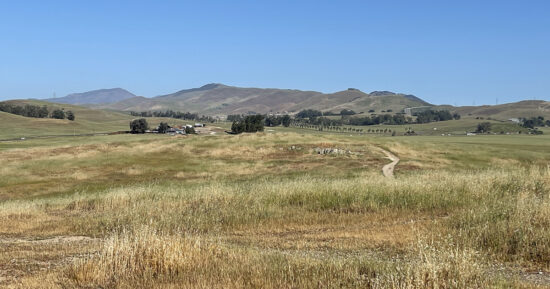
On March 30, 2022, the First District Court of Appeal published its opinion in Save the Hill Group v. City of Livermore (2022) 76 Cal.App.5th 1092, invalidating an Environmental Impact Report (“EIR”) for the Garaventa Hills Project (“Project”) because it failed to disclose the feasibility of funding sources or rezoning that could allow the
Full Quantification of Water Rights Not Required for CEQA Review, Second District Declares

On March 22, 2022, the Second District Court of Appeal published its Opinion in Buena Vista Water Storage District v. Kern Water Bank Authority (2022) 76 Cal.App.5th 576, upholding the Environmental Impact Report (EIR) for the Kern Water Bank Authority’s Conservation and Storage Project (“Project”) and reversing the trial court’s ruling. The Project proposes