
Last week, the Clean Air Scientific Advisory Committee formally transmitted its recommendations to EPA Administrator Regan regarding the PM2.5 NAAQS. Consistent with trade press reporting over the past few months, the majority of CASAC members recommended that the PM2.5 NAAQS be set between 8-10 ug/m3. A minority recommended the range be set between 10-11 ug/m3.
Brazilian Supreme Court Climate Litigation Day: Justices to Decide Several Climate Litigation Cases on March 30

Amidst the recent uptrend of climate litigation cases in Brazil, the Brazilian Supreme Court has scheduled for March 30, 2022 a trial session covering several different lawsuits involving the protection of the environment and effects on climate change. This is an important milestone for the Brazilian climate litigation landscape, as this is the first time a Supreme Court session will be exclusively dedicated to climate-themed cases.
SEC Proposes Climate Change Disclosure Rules Applicable to Public Companies
On March 21, 2022, the U.S. Securities and Exchange Commission (SEC) voted 3:1, with only Commissioner Hester Peirce dissenting, to propose long-awaited rules that, if adopted, would require extensive reporting by public companies of climate change-related disclosure and related attestation (the “Proposal”). Comments on the Proposal are due 30 days after
SEC Issues Long-Awaited Proposed Rule on Climate Disclosures
Registered public companies would be required to report their greenhouse gas (GHG) emissions and certain information regarding climate-related financial risks and metrics, including any actual or likely material impacts to their businesses, pursuant to a long-awaited proposed rule the U.S. Securities and Exchange Commission (SEC) voted 3-1 to issue on March 21, 2022.
Three Takeaways from the SEC’s New Proposed Rules on Climate Disclosures
Today, the Securities & Exchange Commission voted 3 to 1 in favor of adopting a long-awaited set of proposed revisions to SEC regulations concerning the disclosure of climate risks and related financial impacts, as well as data on greenhouse gas emissions in certain SEC filings. The recommendation to adopt the new set of rules was
Boston Promulgates BERDO “Phase I” Regulations: Emissions Standards For Buildings Are Coming Soon
The Boston Air Pollution Control Commission has formally adopted its “Building Emissions Reduction and Disclosure Ordinance Phase 1 Regulations.” The Phase 1 regulations are really all about the “disclosure” side of BERDO. The “reduction” side will be addressed by the Phase 2 regulations, which at this point are scheduled to be completed by the
EPA Puts Industry on Notice of Potential TSCA Violations for PFAS Contamination in Plastic Containers
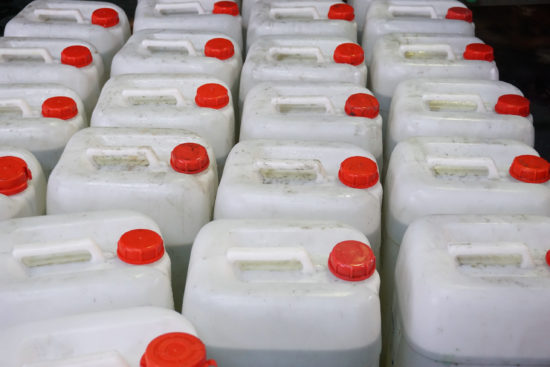
Does your company manufacture, process, distribute, use, or dispose of fluorinated high-density polyethylene (HDPE) containers and similar plastics? If so, it may be time for supply chain and process reviews aimed at identifying and eliminating possible per- and polyfluoroalkyl substance (PFAS) contamination.
NY HERO Act Update: COVID-19 Designation Expires
By Robert S. Whitman and Amanda Williams
Seyfarth Synopsis: The New York Commissioner of Health has declined to extend the designation of COVID-19 as a highly contagious communicable disease under the NY HERO Act. Employers are no longer required to activate their safety plans.
As previously reported (most recently here), the New York State Commissioner
Issuing Unconditional “McDill” Tender to Plaintiffs with Pre-Existing Injuries
Under Louisiana law, uninsured/underinsured (“UM”) insurers are under strict requirements to issue “good faith” unconditional tenders of the undisputed portion of the plaintiff’s damages. These unconditional tenders are not contingent on the final disposition of the case, rather they must be paid up front and cannot be recovered in the event of a lower judgment