
We are back in San Juan, Puerto Rico for Day 2 of the American Bar Association’s Workplace and Occupational Safety and Health (WOSH) Committee Midwinter Meeting. Today’s sessions featured a diverse mix of experts—behavioral psychologists, management and employee-side attorneys, consultants, and industry representatives—discussing workplace violence, settlement strategies, drug and alcohol challenges, newly-proposed regulations, and broader
Report From Day 1 of the 2026 ABA OSH Law Conference
We are in San Juan, Puerto Rico for the American Bar Association’s Workplace Occupational Safety and Health committee’s midwinter meeting. Today’s sessions featured panels of employer and defense attorneys, representatives from various non-profit organizations dedicated to workers safety, and state regulatory agencies discussing the impact of recent deregulation, discrepancy in inspections and enforcement, and the
Court of Appeal Upholds EIR’s Water Supply Analysis for American Canyon Warehouse Project

In City of Vallejo v. City of American Canyon (Case No. C102070), the Third District Court of Appeal affirmed the trial court’s judgment rejecting a neighbor city’s CEQA challenge to the Environmental Impact Report (“EIR”) for the 2.4 million-square-foot Giovannioni Logistics Center project in American Canyon. The court held that the EIR and associated Water
Agricultural Law Weekly Review—February 24, 2026
Webinars this week—Register Now!
- Feb. 24 at noon, AgWorks: Wage and Hour Laws—Calculation and Enforcement
- Feb. 27 at noon, Understanding the Basics of the USDA National Appeals Division with Devin Winklosky, former USDA Administrative Judge (Attorney CLE available)
International Trade: President Issues Executive Order Increasing Tariff-Rate Quota for Argentinian Beef, Trade Agreement Signed with Argentina
Court of Appeal Affirms Categorical Exemption for Playground Relocation in Davis, Rejects Unusual Circumstances Argument

In Krovoza v. City of Davis (2025) 117 Cal.App.5th 623, the Third District Court of Appeal affirmed the trial court’s denial of a writ petition challenging the City of Davis’s use of categorical exemptions under the California Environmental Quality Act (CEQA) for the relocation of playground equipment within a city park. The court held that
New York State Public Service Commission Initiates New Proceeding to Address Interconnection Reforms for Large Loads (Energize NY Development)
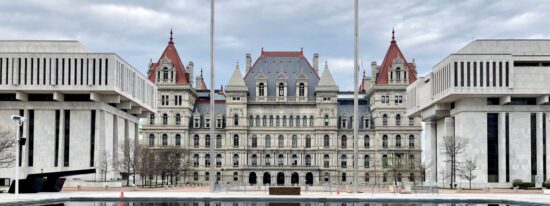
On Feb. 12, 2026, the New York State Public Service Commission (PSC) initiated a new proceeding (Case 26-E-0045) to reform how large electricity users connect to the grid. Case 26-E-0045, titled “In the Matter to Address Interconnection Reforms for Large Loads,” aims to reform and define interconnection policies for high-demand electric customers and support both
What to Watch for in 2026: EPA Highlights Major PFAS Actions in 2025 and Plans for Next Steps
On February 6, 2026, the US Environmental Protection Agency issued a press release highlighting significant actions addressing per- and polyfluoroalkyl substances (PFAS) taken during the first year of the new administration and signaling continued expansion of efforts affecting regulated entities. The announcement reiterates EPA’s continued commitment to making PFAS a top priority across its programs. The release
Biosolids and PFAS: A Regulatory Patchwork
Biosolids are treated waste solids generated from sewage sludge that have been processed so that they can be applied to land as a fertilizer. Advocates of biosolid use point to its ability to enrich soil without the use of synthetic fertilizers.
Biosolids have long been regulated by the Environmental Protection Agency (EPA) and state regulatory
USFWS Proposes Changes under the Endangered Species Act
The Endangered Species Act (“ESA”) has seen a 99% success rate in protecting listed species since its inception in 1973. After celebrating its 52nd anniversary this year, there are diverging views about how to continue to advance this success while developing efficiencies in the decision-making process. Most recently, the US Fish and Wildlife Service (“USFWS”) published four proposed rulemakings in quick succession that generated thousands of comments from the public, zoo and animal foundations, and other interested parties. The four proposed rules specifically relate to listing and delisting decisions, interagency cooperation and consultation, allowance of economic factors in decision-making, threatened species protection, and critical habitat exclusions. The comment deadline for all four proposed rules was December 22, 2025, despite requests from multiple organizations for an extension of the comment period to March 2026. Over 300,000 comments were received on each proposed rule prior to the deadline.
Court Rejects Privilege Claim Over AI-Generated Documents
A recent federal court decision determined that documents created by a criminal defendant using AI and subsequently shared with legal counsel were not shielded by attorney-client privilege or the work product doctrine. In USA v. Heppner, Judge Jed S. Rakoff of the U.S. District Court for the Southern District of New York compelled the