
Ag-Gag Statutes: Kansas Files for Supreme Court Review of its ‘Ag-Gag’ LawOn November 17, 2021, Kansas Governor Laura Kelly and Kansas Attorney General Derek Schmidt filed a petition for writ of certiorari in the U.S. Supreme Court seeking review of the U.S. Court of Appeals for the Tenth Circuit’s August 2021 decision that: (1)
Regional US Transportation & Climate Initiative Program Comes to an End
A multistate cap-and-invest program to reduce carbon emissions from the transportation sector is dead after several participating states pulled out.
By Jean-Philippe Brisson, Joshua T. Bledsoe, Benjamin Einhouse, and Brian McCall
Less than one year ago, the governors of Massachusetts, Rhode Island, and Connecticut, as well as the mayor of the District of Columbia, announced that their respective jurisdictions would establish the Transportation & Climate Initiative Program (TCI-P) and released a memorandum of understanding (MOU) describing the agreed-upon principles for adoption and implementation of a regional program aimed at reducing carbon emissions from the transportation sector. But in the past two weeks, three of the four jurisdictions that signed the MOU have pulled out, effectively terminating the TCI-P.
Revocation of Trump Administration’s Migratory Bird Treaty Act Rule Takes Effect
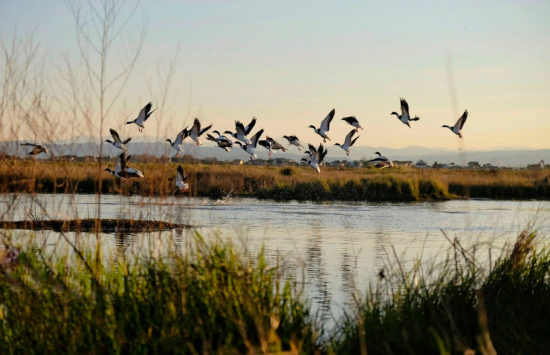
The US Fish and Wildlife Service’s (USFWS or the Service) revocation of the Trump administration’s Migratory Bird Treaty Act (MBTA) rule took effect last Friday, December 3. On the same date, the public comment period closed on the Service’s Advanced Notice of Proposed Rulemaking (ANPR), in which USFWS announced its plan to issue a proposed regulation codifying an interpretation of the MBTA that prohibits incidental take, and to propose a system of regulations to authorize the incidental take of migratory birds under certain conditions.
E2 Law Podcast Episode: The New Environmental Rights Amendment to the NY Constitution

You are invited to listen to the latest episode of Greenberg Traurig’s E2 Law Podcast, “The New Environmental Rights Amendment to the NY Constitution.”
In the first episode of the 2022 Evolving Environmental Law miniseries, Shareholders Steven C. Russo and David G. Mandelbaum discuss the recently enacted Environmental Rights Amendment to the New
Breakfast Briefing – Back to the Future or the Past? What 2022 Has in Store for Labor and Employment Laws
Many will argue that 2021 was simply a variant of 2020. As expected, the Biden Administration has been very deliberate and at times aggressive with their COVID-19 tactics and executive orders, pushing employers to quickly make changes to their policies. Moving into 2022, business leaders and legal analysts are predicting the Administration will refocus on
US Supreme Court Decision May Affect NRD Trusteeship Determinations
The decision could complicate states’ ability to pursue groundwater natural resource damages actions.
By Kegan A. Brown, Gary P. Gengel, Thomas C. Pearce, and Taylor R. West
On November 22, 2021, the US Supreme Court held that equitable apportionment applies to a dispute between states about their respective interests in groundwater that flows through multiple states in Mississippi v. Tennessee.[1] The decision may have implications for natural resource damages (NRD) claims. Natural resource trustees often assert claims to pursue damages to groundwater. In assessing these claims, courts often must determine (1) whether the trustee has a trusteeship interest in the groundwater resource at issue, and (2) if so, the extent of the trustee’s interest in that groundwater resource relative to the interests of other trustees in the same groundwater.
Who can perform laboratory tests on an owned animal in California when no veterinarian-client-patient relationship exists?
California recently updated it’s website providing answers to “Frequently Asked Questions Regarding Veterinarian-Client-Patient Relationship (VCPR)” pursuant to California Code of Regulations (CCR), Title 16, Sections 2032.1, 2032.15, and 2032.25.
Answers to the first four questions posed, clarify when a VCPR is required, but the answer to the last question may require specific examples to
GHG Mitigation Once More Found Lacking in San Diego County EIR; Fourth District Also Identifies General Plan Inconsistency but Upholds Wildfire and Air Quality Analyses in Unpublished Opinion

In the unpublished Elfin Forest Harmony Grove Town Council v. County of San Diego (Oct. 14, 2021, Nos. D077611, D078101) [2021 Cal. App. Unpub. LEXIS 6474], the Fourth District Court of Appeal found that the County of San Diego’s (County) approval of the Harmony Grove Village project’s (Project) environmental impact report (EIR) did not employ
Update on OSHA vaccine ETS litigation: Challengers seek hearing en banc as government moves to dissolve stay
After the Sixth Circuit was selected via a lottery in November to hear the consolidated challenges made against the recent OSHA emergency temporary standard (the “ETS”), there has been a flurry of activity in the case. There are currently two main issues pending before the court, which will certainly shape the dispute: (1) several petitioners
Natural Gas Processors to Report to EPA’s Toxic Release Inventory Beginning 2023
In a final rule published in the Federal Register on November 24, the Environmental Protection Agency (EPA) quietly finalized a hotly contested proposed rule, adding natural gas processing facilities to the list of industry sectors required to report their releases of certain chemicals under Section 313 of the Emergency Planning and Community Right-to-Know Act (EPCRA), also known as the Toxic Release Inventory (TRI). Facilities must report releases and waste management of specifically listed chemicals to the TRI if they: (1) have 10 or more full-time employees, (2) have a primary Standard Industrial Classification (SIC) or North American Industry Classification System (NAICS) code listed in the regulations, and (3) manufacture, process, or otherwise use certain listed chemicals in the course of a calendar year in quantities exceeding identified thresholds.