
Last week, the Department of Energy released a proposed rule that would be the death knell for the incandescent light bulb. The proposed rule would implement the so-called “backstop” provisions of the Energy Policy and Conservation Act, and impose an efficiency standard for general service lamps of 45 lumens per watt. In short, incandescent bulbs
Wayne Hsiung, the activist who stole a goat kid named “Freddie,” found guilty of felony theft in North Carolina
According to the owners of Sospiro Goat Ranch, a small family goat farm in North Carolina, as reported on their blog, “the Facts About the Attack On Our Farm,” dated 7/4/2018, “vegan terrorists” trespassed onto their farm and stole two kids (baby goats)—one in 2017 and another, Freddie, in 2018—claiming that the kids
CARB Previews Future Changes to California Low Carbon Fuel Standard

On December 7, 2021, the California Air Resources Board (CARB) held a public workshop to preview potential changes to the groundbreaking California Low Carbon Fuel Standard (LCFS) program, which has served as a model for other low carbon fuel programs across the country. CARB is accepting written public comments on the concepts presented in the workshop through January 7, 2022.
CASAC Signals that a Lower PM2.5 NAAQS Is On the Way; It Can’t Come Too Soon
The momentum continues to build for a more stringent National Ambient Air Quality Standard for PM2.5. In June, EPA announced it would revisit the Trump Administration’s decision to keep the PM2.5 NAAQS at 12 ug/m3. In early October, EPA staff released a supplement to its assessment of the PM2.5 NAAQS. That supplement also supported a
Just Transition: The World Benchmarking Alliance Publishes Its ‘Just Transition Assessment’

During the COP26 summit, a coalition of 190 countries and organisations committed to phase out coal energy by 2040 as part of their commitment to transition to a low-carbon economy. The coalition also stated, in their ‘Global Coal To Clean Power Transition Statement’, that they would provide a framework to support affected workers, sectors and communities to make a “just transition” away from unabated coal power. The coalition’s concern is that the transition to a low-carbon economy may leave many coal-dependent economies at risk of economic hardship and social unrest.
The ‘Just Transition Assessment‘ (the Assessment) recently published by the World Benchmarking Alliance (WBA) provides important insight into the metrics that NGOs may lobby for in order to achieve what they view as a “just transition” (for information on some of the WBA’s other initiatives, please see our Corporate Human Rights Benchmark publication). In carrying out the Assessment, the WBA states that it has measured the actions that some of the world’s most influential companies have taken to support workers and communities whilst they transform to low-carbon business models.
The Assessment contends that there is a “systematic lack of action by companies to identify, prepare for and mitigate the social impacts of their low-carbon strategies”. The Assessment goes on to state that these purported inadequacies need to be addressed, as transition risks being adversely affected by social unrest among those whose livelihoods are threatened.
Hong Kong Regulator Issues Sustainable Investing Principles for Pension Fund Trustees

On November 26, 2021, Hong Kong’s Mandatory Provident Fund Schemes Authority (MPFA) advanced the Special Administrative Region’s sustainable finance strategy with new Principles for Adopting Sustainable Investing in the Investment and Risk Management Processes of MPF Funds (the Principles). The Principles lay out a high-level ESG integration framework for trustees of Mandatory Provident Funds (MPF), the investment vehicles for the Hong Kong’s mandatory retirement protection scheme, across four key elements: governance, strategy, risk management and disclosure.
In this Blog Post, we provide a brief overview of the Principles and highlight each element, as well as important next steps for MPF trustees. We also provide guidance on how companies are already implementing ESG frameworks similar to the Principles.
Equitable Apportionment of Interstate Waters Sinks to New Levels
In a landmark ruling signaling a new lens with which to view the treatment of interstate water allocation, the U.S. Supreme Court issued a decision on November 22 in Mississippi v. Tennessee, et al., 595 U.S. ___ (Case No. 21o143) rejecting Mississippi’s claim to sole ownership of waters of the Middle Claiborne Aquifer within that state’s borders. Instead, the Court held that the traditional remedy of equitable apportionment used to allocate surface waters of streams and rivers should apply. The case represents the first time that the Court has held that equitable apportionment applies to groundwater, which may open the door to new disputes among border states who claim equal rights to underground water resources.
The Future of Plastics Has Been Bright; Can We Keep It That Way?
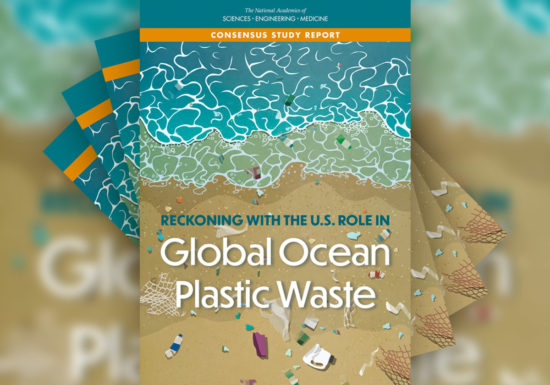
It has now been more than 50 years since the iconic moment in The Graduate where Mr. Maguire tells Ben that “there’s a great future in plastics.” Truer words have never been spoken. The release this week of “Reckoning with the U.S. Role in Global Ocean Plastic Waste” by the National Academies of
ESG & Sustainability Reporting Developments: Climate Disclosure Prototypes
ESG and sustainability disclosure and reporting requirements for listed and non-listed companies are rapidly taking shape. As announced at COP26, there is now an International Sustainability Standards Board (“ISSB”) tasked with encouraging global uptake of ESG reporting standards. In the EU, the European Financial Reporting Advisory Group (“EFRAG”) is the body tasked with developing mandatory sustainability and ESG reporting standards under the EU’s Corporate Sustainability Reporting Directive (“CSRD”). Both the ISSB and EFRAG have each recently published ESG and sustainability disclosure and reporting “prototypes”. These prototypes are important pieces to an emergent reporting regime that is very likely to become critical commercially—if not mandatory—for many companies. There are also encouraging signs that what has until recently been a relatively disjointed set of standards, is beginning to come together under a more harmonized agenda and institutions.
This blog presents an overview of some of the detailed climate-related disclosure and reporting metrics covered by the ISSB and EFRAG climate prototypes, and highlights critical considerations for companies as more detailed and mandatory ESG and sustainability reporting frameworks begin to take shape.
Agricultural Law Weekly Review – Week Ending November 26, 2021
Ag-Gag Statutes: Kansas Files for Supreme Court Review of its ‘Ag-Gag’ LawOn November 17, 2021, Kansas Governor Laura Kelly and Kansas Attorney General Derek Schmidt filed a petition for writ of certiorari in the U.S. Supreme Court seeking review of the U.S. Court of Appeals for the Tenth Circuit’s August 2021 decision that: (1)