
On August 27, 2021, Justice Peter Lynch of the New York State Supreme Court, Albany County issued the first substantive ruling in Town of Copake v. New York State Office of Renewable Energy Siting, No. 905502-21 (Sup. Ct. Albany Cty. Aug. 27, 2021), a lawsuit challenging the validity of regulations promulgated by the New York State Office of Renewable Energy Siting (ORES). Specifically, in a brief order, the Court denied the petitioners’ request for a temporary restraining order and ordered argument on whether the petitioners are entitled to a preliminary injunction. Oral argument is scheduled for September 8, 2021.
“Good as Gold or Fool’s Gold – What Does It Mean to an Owner for a Contractor to be Licensed, Bonded, and Insured?”
Trippe Hawthorne, a partner, and construction lawyer at Kean Miller, was a featured author for the American College of Real Estate Lawyers (ACREL), where he wrote on the subject of contractors and what it means to be licensed, insured, and bonded. Many property owners see this nomenclature in marketing and promotional materials for General
EPA Signals More Stringent Regulation for Steam Electric Power Generators
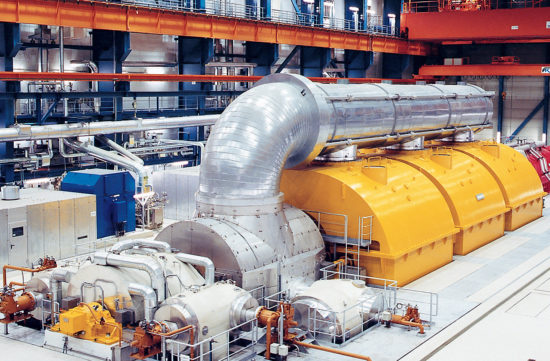
EPA announced yesterday its intent to revise some portions of the 2020 Steam Electric Effluent Limitation Guideline Reconsideration Rule (2020 ELG Rule). EPA’s press release and the pre-publication version of its Federal Register notice sent a clear message that the agency is aiming at membrane technology to control flue gas desulfurization (FGD) wastewater discharges from
Back to the Future: Waters of United States Reverts to Pre-2015 Definition
Developers, ranchers, farmers and others who fill or alter bodies of water have seen a never-ending carousel of regulatory changes to the federal rules that apply to such activities. Earlier this week, an Arizona federal court made one more change while new rules are being written.
On August 30, 2021, the U.S. District Court for
Pennsylvania Moves One Step Closer to Issuance of Drinking Water Standards for PFOA and PFOS
At its July 29, 2021 meeting, the Pennsylvania Department of Environmental Protection (“Department”)’s Public Water System Technical Assistance Center (TAC) Board voted to recommend that the Department proceed with a draft proposed rulemaking to set maximum contaminant levels (MCLs) in drinking water for certain PFAS compounds. The Department has proposed drinking water levels of 14
New York State Department of Taxation and Finance Issues Preliminary Appraisal Model and Discount Rates for Solar and Wind Energy Projects – Comments Due by October 1, 2021
Earlier this year, as part of the New York State budget, the Legislature enacted New York State Real Property Tax Law Section 575-b (RPTL 575-b), which creates new requirements for the real property taxation of wind and solar energy projects that have a nameplate capacity of 1 megawatt (MW) or greater. These new requirements are applicable to projects that are not subject to a payment in lieu of taxes (PILOT) agreement and, notwithstanding these statutory changes, municipalities will continue to have the flexibility to enter into PILOT agreements with project proponents. Municipalities are likely, however, to look to the new requirements for guidance when negotiating such PILOT agreements.
Just When You Thought Your Cleanup Was Done—NJDEP Issues New Guidance on Contaminants of Emerging Concern
On August 5, 2021, the New Jersey Department of Environmental Protection (“NJDEP”) issued updated guidance on how remediating parties and Licensed Site Remediation Professionals need to address Contaminants of Emerging Concern (“CECs”). The guidance documents address timeframes for addressing CECs, include frequently asked questions regarding CECs, and provide a list from the EPA of industry
A Corporate Diversity Benchmark in ESG

We are regularly asked if there is a checklist for ESG compliance and while there is not, with promised federal regulations not yet promulgated, there is good guidance available.
Fifth District Holds Issue Exhaustion Not Required Where Agency Gave No Notice of Intent To Rely On CEQA Exemption Prior to Hearing, And Existing Facilities Categorical Exemption Does Not Apply to Unlined Landfills As A Matter of Law
In a published decision filed August 17, 2021, the Fifth District Court of Appeal affirmed the trial court’s judgment directing issuance of a writ of mandate ordering Inyo County to vacate three resolutions of necessity that authorized its condemnation of three Owens Valley landfill properties, including appurtenant water rights, owned by the Los Angeles Department of Water and Power (LADWP). Los Angeles Dept. of Water & Power v. County of Inyo (2021) 67 Cal.App.5th 1018. The County operates three landfills on the properties pursuant to leases from LADWP. In the published part of the opinion, the Court of Appeal held that CEQA’s issue exhaustion requirement did not apply to LADWP’s challenge to the County’s exemption determinations because the County failed to provide adequate notice of them, thus depriving LADWP of an opportunity to be heard on the issue. As a matter of law, the Court also held the County improperly relied on the existing facilities exemption for the project.
Updates Coming to NY State Petroleum Bulk Storage and Chemical Bulk Storage Rules – Public Comment Period Extended to December 6, 2021
The New York State Department of Environmental Conservation (NYSDEC) is updating its Petroleum Bulk Storage (PBS) and Chemical Bulk Storage (CBS) rules. The PBS and CBS programs regulate facilities storing small to large quantities of petroleum and other chemicals, and related spills and releases of petroleum and hazardous substances. The purpose of the updates is