
As part of national plans to cut carbon emissions, the UK Cabinet Office released a Procurement Policy Note on 5 June 2021 (“PPN 06/21“, or the “PPN“): this mandates the assessment of Carbon Reduction Plans by UK central government departments as part of the procurement of large public contracts.

Key aspects of the Public Procurement Notice

  • UK Procurement Policy Note 06/21 requires a bidder for large public contracts (exceeding £5 million per annum) to produce a Carbon Reduction Plan (CRP) setting out how it intends to achieve ‘net zero’ carbon emissions by the year 2050 (compared to 1990 levels).
  • This relates to regulated contracts for goods, services and/or works awarded by UK central government departments, their executive agencies and non-departmental public bodies.
  • This will apply to procurement processes commenced on or after 30 September 2021 – bidders should take steps now to prepare for compliance, which might require new data collection and reporting procedures.
In a previous post, we reported on the Climate Risk Disclosure Act of 2021 (the “Act’) being placed on list of all bills reported from committee and eligible for House floor action,  some sweeping changes required by that Act, and the Act’s uncertain future in the Senate.

This Part II focuses on the

On July 13, 2021, the Pennsylvania Environmental Quality Board approved a rulemaking  to establish a program to limit the CO2 emissions from fossil fuel-fired electric generating units (EGU) located in the Commonwealth.

The stated purpose of the final-form rulemaking is “to reduce anthropogenic emissions of CO2, a greenhouse gas (GHG) and major contributor to climate

An example of a new trend towards recognizing “Environmental, Social and Governance” (“ESG”) impacts from business operations is the recently introduced Climate Risk Disclosure Act of 2021 (“the Act”).  As currently drafted, the Act would require significant new public disclosures from publicly traded companies regarding financial risks to their operations and profitability from climate change (e.g., air emissions, risks to facilities from storms, lending and insurance costs, etc.).  Such disclosures could also indirectly impact non-publicly traded companies (domestic or foreign) who provide goods and services to publicly traded companies.

ESG is a topic increasingly accepted as central to legal, corporate and financial risk assessment and strategy for business leaders. The environmental stewardship aspect of ESG can be evaluated in part by measuring a company’s greenhouse gas emissions, energy efficiency and overall sustainability. Social values often consider a company’s relationship with its employees, diversity and inclusion policies, labor standards, and contributions to the communities in which it operates. Lastly, the governance facet of ESG considers a company’s leadership, internal structure, and core values.

Board-level executives across industries are grappling with how to address and leverage ESG related issues to both mitigate risks as well as create long-term value for their organizations. ESG is a complex topic attracting comment from various stakeholders including shareholders, customers, suppliers, financial lenders and employees. We are now seeing more ESG initiatives in legislation, as described below.

CEQ report calls for widespread CCUS deployment to achieve climate goals.

By Joshua T. Bledsoe, Nikki Buffa, and Nolan Fargo

On June 30, 2021, the White House Council on Environmental Quality (CEQ) issued a report to Congress that outlines a framework for how the US can accelerate carbon capture, utilization, and sequestration (CCUS) technologies and projects in a way that is efficient, orderly, and responsible.

Identifying CCUS Needs

The report, which Congress directed CEQ to prepare as part of the USE IT Act, states that to successfully increase CCUS deployment, strong and effective permitting and regulatory regimes and meaningful public engagement will be required. These measures include:

  • Developing regulatory regimes in a manner that is informed by science and experience
  • Addressing pollution in overburdened communities
  • Increasing support for CCUS research
  • Developing and enhancing incentives such as 45Q Tax Credits

This is the twenty-third in our series, “The ABCs of the AJP.”

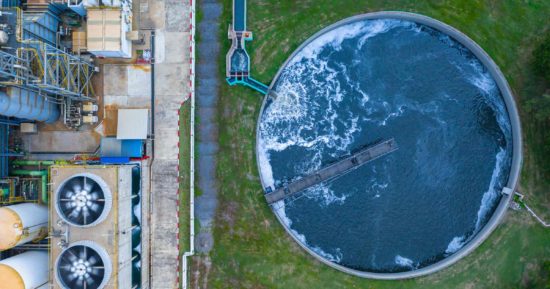
President Biden’s American Jobs Plan (AJP) proposed $111 billion of investments into improvements in drinking water and wastewater management systems across the United States.  The Bipartisan Infrastructure Framework that the President endorsed last week would provide just about half of that amount – $55 billion – which the President nevertheless described as “the largest investment in clean drinking water and waste water infrastructure in American history.”

Continued commitments to renewable generation in 2021 mean that corporate purchasers remain major drivers in the development of new wind and solar power generation projects in the United States.  Megawatt numbers vary depending on the source; however, there is no dispute about the significant role played by corporates.  While corporate offtakers were initially focused on wind generation, corporate offtakers now regularly contract for solar generation as well.