
Because we were reminded this last year how interconnected it all is, and hopefully, we learned a few things about how to keep it beautiful, bountiful, and healthy.
Read the full GT press release.

Because we were reminded this last year how interconnected it all is, and hopefully, we learned a few things about how to keep it beautiful, bountiful, and healthy.
Read the full GT press release.
Briefing for certiorari has recently completed in Volkswagen v. Environmental Protection Commission of Hillsborough County. The challenged Ninth Circuit decision, if permitted to stand, could have significant effects on federal administration of motor vehicle emissions regulations, and enforcement actions against auto manufacturers.
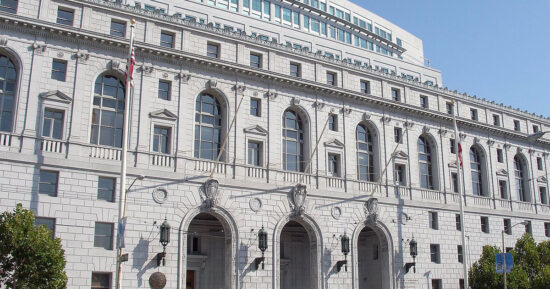
On December 11, 2019, the California Supreme Court granted review of the Third District’s decision in County of Butte v. Department of Water Resources, dismissing a CEQA challenge to DWR’s relicensing application to the Federal Energy Regulatory Commission (FERC) for the Oroville Dam on the basis that the claim was preempted by federal law. The
On March 23, 2021, the United States Court of Appeals for the Second Circuit (the “Second Circuit” or the “Court”) agreed with FERC’s determination that the New York State Department of Environmental Conservation (“DEC”) had waived its certification authority under the Clean Water Act (“CWA”) by failing to act within the one-year statutory deadline. Notably, the Second Circuit held that a state agency cannot revise a certification request date by written agreement with the applicant, thereby altering the one-year statutory deadline for state action. Denying the petitions for rehearing by DEC and the Sierra Club, the Court applied the same reasoning it applied in New York State Dep’t of Env’t Conservation v. FERC (“New York I”), 884 F.3d 450, 455-56 (2d Cir. 2018) (see March 20, 2018 edition of the WER) where the Second Circuit determined that DEC could not unilaterally alter the application date based on when it considered an application complete “because that approach would allow a state agency not only to dictate when the review process can begin but also to delay it indefinitely.” There, to avoid such a subjective standard, the Second Circuit established a bright line rule that the beginning of the review is determined by the date “of receipt of such request.”
On April 1, 2021, the Federal Emergency Management Agency (FEMA) released an official announcement (Release Number HQ-21-079) and Memorandum for Write Your Own (WYO) Principal Coordinators and the National Flood Insurance Program (NFIP) Direct Serving Agent (W-21003) outlining plans for implementing its new NFIP rating system known as Risk Rating 2.0 described by FEMA as “Equity in Action.” The press release, memo to NFIP insurers, and a graphic depicting the national impacts of the new premium system are available on the Risk Rating page on FEMA’s website.
On March 23, the Second Circuit issued its opinion in N.Y. Dep’t of Enviro. Conservation v. FERC, Case No. 19-1610 (i.e., the “Empire Pipeline” case). The case concerns the Federal Energy Regulatory Commission’s (FERC or Commission) determination that the New York State Department of Environmental Conservation (NYSDEC) waived its water quality certification authority with regard to FERC’s issuance of a gas pipeline certificate when NYSDEC sought to extend its review period beyond the one-year deadline under Section 401 of the Clean Water Act (CWA or Act) by agreeing with the applicant to “post-date” the filing date of its water quality certification application by several weeks.
Recently, the United States District Court for the Western District of Pennsylvania relied on the statute of limitations to dismiss claims related to allegedly improper transactions involving real estate. Although the statute of limitations is an affirmative defense, it can be asserted in a motion to dismiss if the defense clearly appears on the face of the complaint and the complaint demonstrates that the claims were filed beyond the applicable time period.

Shareholder Erick Hernández Gallego will be panelist at a virtual session hosted by ATA Insights on Tuesday, April 6, 2021 at 11:00 a.m. CST. He will discuss the impact of the recent amendment to the Electric Industry Law and the outlook for the Mexican energy sector in 2021 within this framework. This webinar will
As a follow-up to our March 11, 2021 blog post, as part of implementation of its Final Adopted Winery General Order, the State Water Resources Control Board (“SWRCB” or “Board”) announced that it will be holding a second Winery General Order Fees Stakeholder Meeting on April 28 from 1:00-3:00 PM via Webcast.
On March 18, 2021, FERC issued a Final Rule amending its regulations to establish a one-year period for states, tribes, or other certifying authorities (“Certifying Agencies”) to act on a Clean Water Act (“CWA”) Section 401 water quality certification request for proposed natural gas and liquefied natural gas projects.