
On the evening of December 21, 2020, Congress provided a last-minute boost for clean energy projects and technology by passing a $1.4 trillion federal spending bill together with a $900 billion COVID-19 relief package. According to Senator Lisa Murkowski, Chair of the Senate Energy and Natural Resources Committee, “[the bill] represents the first modernization of our nation’s energy policies in well over a decade.” In particular, the bill’s clean energy provisions include:
EPA Publishes Interim Guidance on the Destruction and Disposal of PFAS
On December 18, 2020, the U.S. Environmental Protection Agency (EPA) released its Interim Guidance on the Destruction and Disposal of Perfluoroalkyl and Polyfluoroalkyl Substances (PFAS) and Materials Containing Perfluoroalkyl and
Polyfluoroalkyl Substances (PFAS). The Interim Guidance is not a rule or statement of policy, but presents currently available information on PFAS destruction and disposal, as
Fifth Circuit Holds That A Jones Act Seaman Can Be Contributorily Negligent For His Own Injuries When Following the General Orders Of His Superior

In the recent 2-1 decision of Knight v. Kirby Offshore Marine Pac., L.L.C, No. 19-30756, 2020 WL 7393534, at *1 (5th Cir. Dec. 17, 2020), the Fifth Circuit held that a Jones Act Seaman was contributorily negligent for his injuries when following the general orders of his superior. The Court analyzed the differences between general
Florida Receives EPA Approval to Assume Clean Water Act Section 404 Program
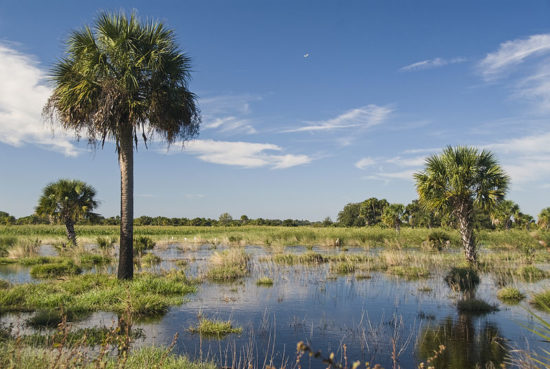
Before yesterday only two states had received approval to administer the Clean Water Act (CWA) section 404 program (Michigan and New Jersey), and no state had received approval since 1994. Now, for the first time in over 25 years, the U.S. Environmental Protection Agency (EPA) has approved the formal transfer of section 404 permitting authority to a third state: Florida. Once EPA’s approval is published in the Federal Register, the Florida Department of Environmental Protection (FDEP) will “assume” 404 permitting authority from the U.S. Army Corps of Engineers (Corps) in certain waters, significantly altering the 404 permitting process in Florida. EPA’s decision has broader implications for the 404 program on a national scale, as other states, including Oregon and Minnesota, consider whether to pursue assumption.
SOUTHERN CALIFORNIA ENVIRONMENTAL UPDATE – NEW AIR QUALITY AND OIL & GAS REGULATORY DEVELOPMENTS
This is a continuing series of posts on the latest environmental and legal developments affecting oil and gas operations and development and other industries in Los Angeles and adjacent counties, as well as the southern San Joaquin Valley. In this post, we provide an update on regulatory developments at the California Air Resources Board, the California Geologic Energy Management Division, the U.S. Environmental Protection Agency and the South Coast Air Quality Management District.
STATE AGENCIES
California Air Resources Board (CARB)
CARB’s ongoing regulatory actions affect industry generally and are focused more heavily on the oil and gas industry. Actions potentially affecting all industries include the AB 617 program, termed by CARB as the Community Air Protection Program, CRT, an evolving regulation requiring substantially increased reporting of both criteria and toxic air emissions and the Low Carbon Fuel Standard, calculating carbon intensity based on Stanford’s OPGEE model.
AB 617, CARB’s Community Air Protection Program (CAPP): CARB’s CAPP action under AB 617, implements Assembly Member Cristina Garcia’s 2017 bill, requiring CARB to identify annually communities that they find impacted by disproportionate air emissions. These communities then assemble Community Steering Committees, and the local air districts must work with these Committees to develop Community Emission Reduction Plans (CERPs). For more background on AB 617 implementation by CARB and the local air district, see Stoel’s California Environmental blogs for October 4, 2019 and May 11, 2018.
The Future of Green Energy – UK Perspective
Climate Policy, Automation, Climate and Ethics (PACE) are at the heart of significant global changes that in turn affect corporate behaviours and governance.
On 23 November 2020, we hosted a panel discussion on The Future of Green Energy. Joined by The Rt. Hon. Kwasi Kwarteng, Richard Gwilliam at Drax, Helen Boyle at Cadent Gas, Victoria Merton at Peel Group and Steve Cox at Electricity North West, our panel explored the future of green energy and the challenges faced by the industry, as well as highlighted the significance of the “green industrial revolution” in fuelling economic recovery.
In this article, we have summarised the key themes of the discussion, and you can also view a recording of the full debate.
Ohio’s Transformational Mixed-Use Development Tax Credit Nears Passage
After taking three years to wind its way through the Ohio General Assembly, Senate Bill 39 may pass out of the Legislature by the end of the year. The Bill would create a “Transformational Mixed-Use Development” (TMUD) tax credit. The TMUD tax credit provides a 10% tax credit for documented development costs. If the project
The CMA’s market study into the UK electric vehicle charging sector
On 2 December 2020, the Competition and Markets Authority (“CMA”) announced a market study (the “study”) into the UK’s bourgeoning electric vehicle charging sector. This blog post considers the scope of the study, and may be of interest to Electric Vehicle market participants across the supply chain.
State Water Board Staff Releases Staff Preliminary Draft Statewide Construction Stormwater General Permit and Announces Virtual Workshops
On November 30, 2020, State Water Resources Control Board (State Water Board) staff released a preliminary staff draft of the Statewide Construction Stormwater General Permit (Preliminary Draft General Permit). In conjunction with its release of the Preliminary Draft General Permit, State Water Board staff also announced that they will hold two public workshops regarding the preliminary staff draft. According to the Public Notice, the workshops are intended to: (1) provide stakeholders and interested parties information regarding the preliminary draft General Permit, and (2) allow stakeholders and interested parties to provide feedback to staff.
The Preliminary Draft General Permit includes:
- New requirements to implement existing Total Maximum Daily Loads;
- New regulation of passive treatment technology uses and discharges from dewatering activities;
- Updated criteria for Notices of Non-Applicability;
- Efficiency to the existing Notice of Termination process;
- Requirements to implement the California Ocean Plan, the Inland Surface Waters Plan, and statewide Trash provisions;
- Updated requirements for demolition activities;
- Updated water quality sampling requirements per the federal Sufficiently Sensitive Test Methods Rule; and
- Updated monitoring and reporting requirements.
The Regional Comprehensive Economic Partnership (RCEP): The Agreement that Promises to Reshape the International Trade Landscape

After several years of negotiation and political posturing, 15 countries signed the Regional Comprehensive Economic Partnership (RCEP) trade agreement on November 15, 2020. The RCEP includes several countries from the Southeast Asia and the Pacific region, including Australia, Brunei, Cambodia, China, Indonesia, Japan, Laos, Malaysia, Myanmar, New Zealand, Philippines, Singapore, South Korea, Thailand, and Vietnam.