
On June 1, the Environmental Protection Agency (EPA) released a final rule clarifying substantive authorities and procedural requirements for water quality certifications under section 401 of the Clean Water Act (CWA). EPA’s August 2019 notice of proposed rulemaking (NOPR) (summarized in our previous post) articulated the Agency’s first-ever statutory interpretation of section 401 since its enactment nearly 50 years ago, and proposed sweeping substantive and procedural changes to its section 401 regulations in conformance with its interpretation. EPA’s final rule largely adopts the regulations in its NOPR, but makes important changes in adopting new regulations that preserve authority of states and Native American tribes exercising “Treatment as a State” (TAS) authorization to ensure that discharges from federally licensed and permitted activities meet state and tribal water quality requirements.
COVID-19 Alert: Judicial Council Amends Emergency Rule 9 for CEQA and Planning Cases
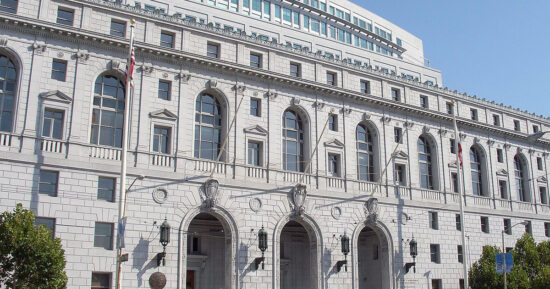
On May 29, 2020, the Judicial Council of California issued a Circulating Order to amend its earlier-issued Emergency Rule 9 in order to shorten the time for tolling statutes of limitations for all civil causes and provide a fixed date, including for causes of action arising under the California Environmental Quality Act (CEQA) and State
Third Appellate District Voids City Council Vote Based on Legislative Member’s Bias

On May 8, 2020, the Third Appellate District, certified for publication its earlier decision in Petrovich Development Co. LLC v. City of Sacramento (C087283), where the Court, in a rare decision, voided a city council’s denial of a conditional use permit (CUP) upon finding that one of the councilmembers was impermissibly biased against the
“Unauthorized Waste” Reporting Under EPA’s Hazardous Pharmaceutical Waste Rule
The new hazardous waste pharmaceutical management standards established by EPA’s Management Standards for Hazardous Waste Pharmaceuticals and Amendment to the P075 Listing for Nicotine (“Rule”) are already effective in some states. Other states must adopt the rule by July 1, 2021 or, if a statutory amendment is required prior to the state’s adoption, by July 1, 2022. Based on this, all “healthcare facilities”[1] and “reverse distributors,”[2] as defined by the Rule, will ultimately be required to comply with the Rule (as adopted in each state).
Heavy-Duty Truck and Engine Regulation by US EPA and CARB: Agency Rulemaking in the COVID-19 Era
The US Environmental Protection Agency (US EPA) and the California Air Resources Board (CARB) are proceeding with development of proposed rules for on-road heavy-duty vehicle and engine regulation. As previously covered in our blog, US EPA and DOT already issued a final rule in early April rolling back greenhouse gas emission (GHG) standards in the context of light-duty vehicles. In anticipation of forthcoming regulation, we are following regulatory developments proposed for the heavy-duty vehicle and engine sector. Anticipated requirements include more stringent NOx standards, changes to test procedures, requirements for zero-emission vehicles in California, and consideration of advanced technologies.
Federal Clean Trucks Initiative
US EPA issued an Advanced Notice of Proposed Rulemaking (ANPR) in January 2020 requesting pre-proposal comments on its Cleaner Trucks Initiative for highway heavy-duty vehicles and engines. Next steps identified at the end of the notice included publishing a Notice of Proposed Rulemaking (NPRM) in 2020 after reviewing comments. In the Fall 2019 Unified Agenda, the agency listed the projected date for the NPRM as June 2020 although there could be delays in publication as a result of the COVID-19 pandemic.
UPDATE: Louisiana Court Closures and Updates in Accordance with COVID-19

The coronavirus continues to adversely impact so many, and the court systems across the country are adapting in kind. Accordingly, the Louisiana Supreme Court has issued orders over the last several weeks to help the court system navigate through these challenging times. Recently, Louisiana’s Governor, in Proclamation JBE 2020-58, lifted the Stay-at Home Order
Keeping it Clean: OSHA, CDC, and state-agency guidance explains how employers can help stop spread of COVID-19
Many businesses are reopening their doors as states lift closure orders. While a plan to reopen will look different for each company, all employers should ensure they are taking appropriate cleaning and safety measures to reduce possible exposure to the virus that causes COVID-19.
The Occupational Safety and Health Administration (OSHA) has recommended several measures that employers can implement to protect workers from COVID-19, and developed interim guidance for specific worker groups. One such group is environmental, or janitorial, services.
National Security Tariff Investigation of Steel-Based Components of Electrical Transformers: Comment Dates Set
As described in an earlier post to this blog, the Commerce Department initiated an investigation under Section 232 of the Trade Expansion Act of 1962 into whether “laminations for stacked cores for incorporation into transformers, stacked and wound cores for incorporation into transformers, electrical transformers, and transformer regulators are being imported into the United States in such quantities or under such circumstances as to threaten to impair the national security.”
Supreme Court Creates New “Functional Equivalent” Test for Groundwater Discharges
Image by Free-Photos from Pixabay.
Wading into a dispute about the Clean Water Act’s applicability to groundwater discharges, the Supreme Court handed environmentalists a somewhat surprising victory in County of Maui v. Hawaii Wildlife Fund. However, the lower courts, EPA, and the regulated community will have many opportunities to shape the significance of the

State Opposition to EPA’s COVID-19 Enforcement Discretion Policy Increases as AGs File Suit
Authors
Mitchell Guc, Associate, Pepper Hamilton
Todd Fracassi, Partner, Pepper Hamilton
Randy Brogdon, Partner, Troutman Sanders
On May 13, nine state attorneys general filed a complaint against the U.S. Environmental Protection Agency (EPA) challenging EPA’s COVID-19 enforcement discretion policy, which we discussed in previous articles here and here. The plaintiff states are New York, California, Illinois, Maryland, Michigan, Minnesota, Oregon, Vermont and Virginia.