
WOTUS: EPA Publishes Rule Requesting Recommendations for WOTUS definition
On March 24, 2025, the U.S. Environmental Protection Agency (EPA) and the Department of the Army published in the Federal Register a proposed rule (90 FR 13428) announcing listening sessions and seeking stakeholder comment on “implementation of the definition of ‘waters of the
UK Government Issues Updated Modern Slavery Act Transparency Guidance: Key Takeaways for Businesses

The guidance clarifies obligations, shares steps businesses should take, and reinforces reporting to combat modern slavery.
By Paul A. Davies, Michael D. Green, James Bee, and Toon Dictus
On 25 March 2025, the UK Home Office published its updated Transparency in Supply Chains (TISC): Statutory Guidance (the Guidance), which provides new and
Maine’s Draft Proposed Rule on PFAS “Currently Unavoidable Use” Determinations
Maine recently published proposed rules (PDF link) aimed at implementation of its existing statute (which we’ve discussed here, here and here) limiting the sale and distribution within the state of products containing intentionally added per- and polyfluoroalkyl substances (PFAS), including long-awaited details on the criteria and process by which entities subject to the
Shale Law Weekly Review—Week of March 31, 2025
Water Quality: Bucks County Attorney General’s Office Announces Investigation into Sunoco Pipeline Leak
On March 11, 2025, the Bucks County Assistant District Attorney Edward Louka announced during a town meeting that the Attorney General’s office would be investigating leaks from a Sunoco pipeline in Upper Makefield, PA. The pipeline leak was confirmed by a Pennsylvania
EPA Issues Solicitation for Clean Air Act Section 112 Presidential Exemptions
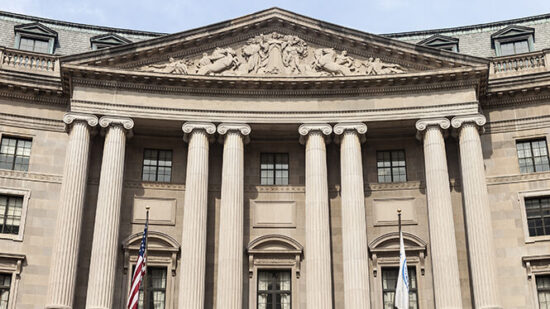
EPA’s electronic mailbox is open for requests from stationary sources until March 31.
By Karl A. Karg, Stacey L. VanBelleghem, and Bruce M. Johnson
In March 2025, the United States Environmental Protection Agency (EPA) announced that it has set up an electronic mailbox to allow stationary sources to request a presidential exemption from certain standards under Section 112 of the Clean Air Act (CAA).
Section 112 requires EPA to establish emission standards for certain stationary sources of hazardous air pollutants. Section 112 also includes a provision that enables the president to exempt stationary sources from compliance with any standard or limitation under Section 112 for up to two years if “the President determines that the technology to implement such standard is not available and that it is in the national security interests of the United States to do so.” 42 U.S.C. § 7412(i)(4). Section 112(i)(4) also provides that such an exemption may be extended “for 1 or more additional periods, each period not to exceed 2 years.”
Agricultural Law Weekly Review—March 26, 2025
This Week: Fri. Mar. 28, 2025, Understanding the Basics of the Clean Water Act & Ag: Impaired Waters & TMDL Process
National Agricultural Policy: USDA Announces $10 Billion for Direct ECAP Payments
On March 18, 2025, the U.S. Department of Agriculture (USDA) announced (PDF) that the agency “is issuing up to $10 billion
President Trump Issues Executive Order Aiming to Increase American Mineral Production

The order aims to coordinate government efforts to fast-track permitting and accelerate funding to enhance critical minerals value chains from the mine to finished products.
By Nikki Buffa, Devin M. O’Connor, and Austin J. Pierce
On March 20, 2025, President Trump issued an executive order titled “Immediate Measures to Increase American Mineral Production”
California Legislature Moves to Set Integrity Parameters for Carbon Removal Credits
California lawmakers recently took a step towards regulating the integrity of carbon dioxide removal (CDR) strategies. If the law passes, it will impact carbon emissions reporting and compliance activities in California. Senate Bill 285 (SB 285), which is set for a hearing on April 2, 2025, aims to establish standards for CDR strategies to ensure
The State of California Water in 2025

Stakeholders should stay informed as state and federal officials advance plans and policies for water conservation, water quality, and climate resilience in California.
By Mike Romey, Lucas Quass, Nolan Fargo, Cody Kermanian, and Samantha Yeager
Following consecutive years of heavy rainfall, California experienced record heat and dry conditions during the summer
California Leaders Move to Support Energy Storage

Our previous post[1] covered the introduction of A.B. 303 (Addis), the “Battery Energy Safety and Accountability Act”, following a catastrophic fire at one of the world’s largest battery energy storage facilities located in Moss Landing, California, starting on January 16, 2025. As we explained, that bill, proposed as an urgency statute, would significantly curtail the authority of both local agencies and the California Energy Commission (CEC) to site new energy storage facilities and would likely result in significant adverse consequences for meeting California’s clean energy goals.