
The First District Court of Appeal filed on June 30, and later ordered published on July 26, 2022, its opinion in County of Mono v. City of Los Angeles (1st Dist. No. A162590) 81 Cal.App.5th 657. The case involves another round in the long-running controversies surrounding Los Angeles’s efforts to secure water for its populace.
Shale Law Weekly Review—Week of August 1, 2022
Methane Emissions: DCP and EPA Resolve Clean Air Act Lawsuit with Consent Decree
On July 27, 2022, DCP Operating Company, along with its affiliates, filed notice of a proposed consent decree with the federal government (on behalf of the EPA) and Colorado in a lawsuit alleging DCP violated the Clean Air Act and Colorado air
Agricultural Law Weekly Review—Week Ending July 29, 2022
Antitrust: Justice Department Files Complaint and Proposed Consent Decrees in Poultry Plant Worker and Contract Grower Compensation Conspiracy
On July 25, 2022, the United States Justice Department (DOJ) announced that it filed a civil antitrust complaint in the U.S. District Court for the District of Maryland alleging meat producers Cargill Inc., Cargill Meat Solutions Corporation,
Using Florida’s Amended Summary Judgment Standard in Litigation

“When you engage in actual fighting, if victory is long in coming, then men’s weapons will grow dull and their ardor will be damped.”
Sun Tzu, Art of War, II.2
Florida’s summary judgment standard has long frustrated attempts to achieve an early and appropriate resolution to litigation. The Florida Supreme Court, however, has recently addressed
EPA Publishes 2021 TRI Preliminary Dataset and Plans to Remove De Minimis TRI Reporting Exemption for PFAS
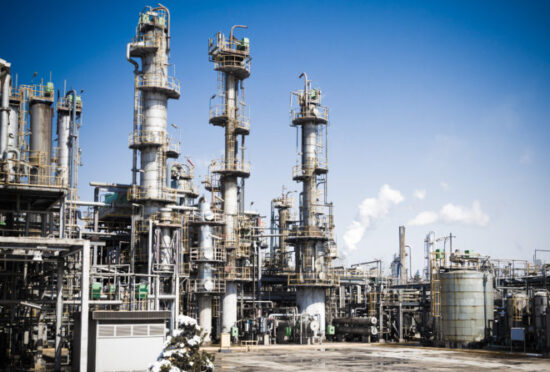
On July 28, 2022, the US Environmental Protection Agency (EPA) published the 2021 Toxics Release Inventory (TRI) preliminary dataset that provides public access to data about chemical releases, waste management, and pollution prevention activities that took place in calendar year 2021 at more than 20,000 federal and industrial facilities across the country. The 2021 preliminary
Do Something about Slavery in Your Business Supply Chain

All organizations, whether in pursuit of the S in ESG or in striving to repair the world, must examine and assess their business practices for slavery now.
Expansion and Long-Term Stability of Climate and Energy Tax Credits
The Inflation Reduction Act of 2022 (the “IRA”) features $260 billion in clean-energy tax credits. While the IRA extends many existing clean-energy tax credits, like the energy production tax credit and investment tax credit for wind and solar, it also establishes new credits, including credits for advanced manufacturing and hydrogen production. Additionally, beginning in 2025,
Inflation Reduction Act Sets the Stage for a National Green Bank
One of the Inflation Reduction Act’s (IRA) notable features is the creation of a Greenhouse Gas Reduction Fund (GGRF). This fund could create a mechanism to quickly disburse up to $27 billion to clean energy technologies, without undergoing the sometimes laborious reviews required by the National Environmental Policy Act (NEPA). IRA § 60103.
Methane Emissions Reduction Program: The Next Step in the United States’ Efforts to Tackle a Potent Greenhouse Gas
The Inflation Reduction Act (IRA) would make significant strides in limiting and cutting methane pollution. Methane has proven to be a significant part of the climate problem; the United Nations’ Environment Programme (UNEP) notes that over a 20-year period, methane is 80 times more potent at warming than carbon dioxide. Studies by the National Oceanic
Environmental Justice Provisions of the Inflation Reduction Act of 2022
The environmental justice provisions included in the Inflation Reduction Act of 2022 (“IRA”) continue the Biden Administration’s commitment to environmental justice. The administration has already demonstrated a consistent desire to build environmental justice into its programs through programs such as the Justice40 Initiative. This initiative directs 40% of the climate change, sustainability, and other