
On Friday, August 22, 2025, the Trump administration announced the cancellation of the Revolution Wind project located off the south coast of Rhode Island, east of Block Island. At the time of the stop work order, the project, based out of the State Pier in New London, Connecticut, was approximately 80% complete with foundations in place
U.S. Coast Guard Rule Targeting Maritime Cyber Threats Adds Yet Another Incident Notice Requirement
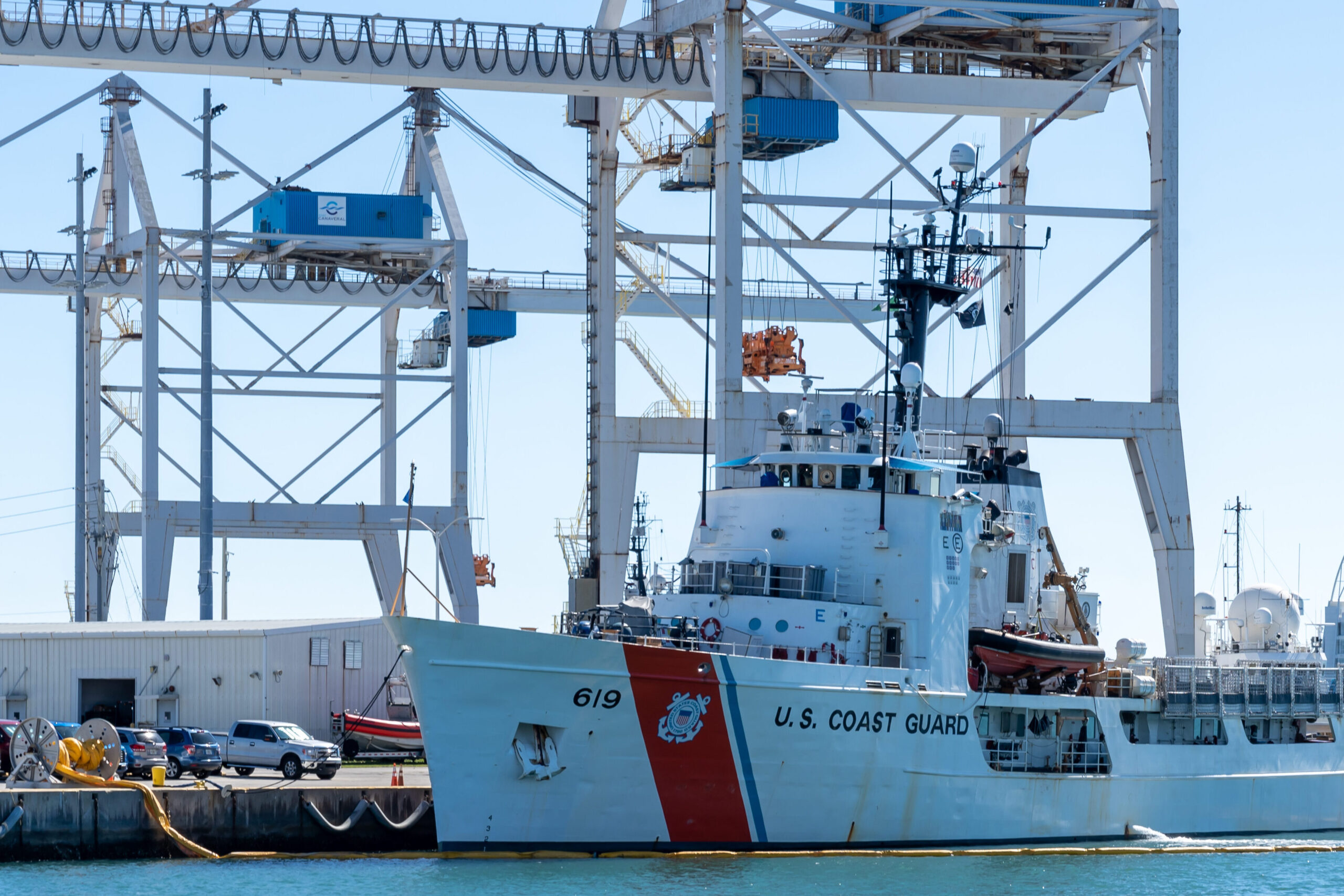
On July 16, 2025, the U.S. Coast Guard’s final rule to update cybersecurity requirements for U.S.-flagged vessels, Outer Continental Shelf (OCS) facilities, and facilities subject Maritime Transportation Security Act of 2022 (MTSA) begins to take effect. The final rule is codified at 33 C.F.R. § 101.600 et seq (“Rule”). In addition to other security regulations
Agricultural Law Weekly Review—August 26, 2025
Register Now, Pay Later! 2025 Agricultural Law Symposium—September 18, 2025. In-person at Penn State Dickinson Law, University Park, Pa., 6 CLE credits available! Early Bird Pricing until Aug. 29!
Attorneys w/ CLE—$150, Non-CLE—$100 REGISTER NOW
Regulatory Policy: Federal Court Orders USDA to Restore Five Sustainable Agriculture Grants
On August 14, 2025, the U.S. District
Ideker, USACE’s new Guidance, And Figuring Out How To Do An Induced Flooding Analysis

On July 28, 2025, the Director of Civil Works for the United States Army Corps of Engineers (USACE), Eddie Belk, issued guidance for analyzing induced flooding. This guidance is intended to help USACE Districts and Divisions in managing an analysis of induced flooding in planning studies (and those projects under design or construction) as a
PFAS Drinking Water Rule Litigation Stay Lifted; 30-Day Extension Sought in Hazardous Substance Designation Case
The U.S. Court of Appeals for the D.C. Circuit granted EPA’s motion to lift the stay in the litigation challenging the maximum contaminant levels (MCLs) for six PFAS chemicals (PFOA, PFOS, PFHxS, PFNA, HFPO-DA commonly known as GenX, and PFBS). On August 1, the parties submitted a joint request to the Court seeking the following: 1)
Shale Law Weekly Review—Week of August 25, 2025
Climate Change: Judge Dismisses Lawsuit Seeking to Hold Fossil Fuel Companies Liable for Climate Change 
On August 6, 2025, the Court of Common Pleas for the Ninth Judicial Circuit dismissed a claim seeking to hold fossil fuel companies liable for climate change. City of Charleston v. Brabham Oil Co. et al. , No. 2020-CP-10-03975
Navigating Florida’s New Real Estate Landscape: Essential 2025 Legislative Updates for Smart Development & Property Investment

Several key bills were passed during Florida’s 2025 legislative session that pertain to the real estate industry, including those that focus on housing affordability and development regulation. Notable legislation from this session includes updates to the Live Local Act, amendments involving local government land development regulation, changes to the availability of wetlands mitigation, and streamlining
“Once In, Always In” for Hazardous Air Pollutants: Back to the Grave
After a few decades of uncertainty and “it’s-alive-it’s-dead-it’s-alive” swings, EPA’s “once in, always in” (OI/AI) policy is once again dead. And this time, it seems very dead.
On June 20, 2025, President Trump signed a Congressional Review Act (CRA) resolution that rejects a September 2024 rule adopted by the Biden EPA that had revived a
Louisiana Board of Tax Appeals Holds That Participation in Status Conferences Constitutes a “Sufficient Step” to Avoid Abandonment Under La. C.C.P. Art. 561.

In Chevron USA, Inc. v Department of Revenue, No. 13111D, (La. Bd. Tax App. July 29, 2025), the Louisiana Board of Tax Appeals (the “Board”) held that the participation of Chevron USA, Inc. (the “Taxpayer”) in multiple status conferences was sufficient to avoid abandonment under La. C.C.P. art. 561 (“Art. 561”). The Board adopted
Agricultural Law Weekly Review—August 19, 2025
Webinar Friday, Aug. 22: Understanding the Basics of Foreign Agricultural Land Ownership Laws
Agribusiness: Texas Foreign Land Ownership Bill Effective September 1, 2025 
On September 1, 2025, Texas Senate Bill 17 (PDF), which prohibits land purchases in the state by certain foreign individuals and entities, becomes effective. The bill, passed into law on