Uncategorized

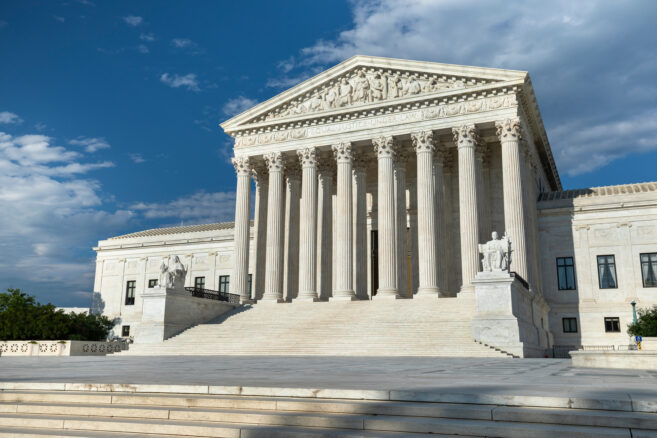
It seems that the death of Chevron deference was not the end of agency deference. Almost a year after striking down Chevron deference, today the U.S. Supreme Court issued a decision on the role of judicial deference towards an agency’s fact and scope determinations. In an opinion penned by Justice Kavanaugh, the U.S. Supreme Court


On May 29, 2025, the United States Supreme Court issued an 8-0 opinion in Seven County Infrastructure Coalition, et al. v. Eagle County, Colorado, et al. that affirmed agency deference in review of environmental documents prepared under the National Environmental Policy Act (NEPA).[1] This important decision will bring much-needed certainty for project developers and

On 22 May 2025, the EU banking supervisor The European Banking Authority (EBA) announced the release of several proposed amendments to its Pillar 3 disclosure requirements, previously contemplated under the CRR3 banking package. These amendments clarify ESG risk-related reporting for small and medium-sized banks, as well as expand on the guidelines for larger institutions. Feedback

The proposal could accelerate the permitting process for projects in the state, including carbon capture and storage (CCS) projects.

By Joshua T. Bledsoe, Nikki Buffa, Jennifer K. Roy, and Samantha Yeager

The US Environmental Protection Agency (EPA) has proposed a significant regulatory change that could expedite permitting for Underground Injection Control (UIC)

The proposals are part of the broader “omnibus” initiative and would postpone due diligence obligations and introduce a “small mid-cap” category for in-scope companies.

By Paul A. Davies, Michael D. Green, James Bee, and Toon Dictus

On 21 May 2025, the European Commission (Commission) published two proposals affecting the timeline and scope

On May 13, 2025, Cal/OSHA released a new discussion draft of its proposed regulation on Workplace Violence Prevention in General Industry. This latest version updates the July 15, 2024 draft we previously blogged about, and reflects stakeholder input gathered through the advisory committee process.

Key Proposed Revisions

Confronting Suspected Criminals

One of the most