
The EPA and the Army Corps of Engineers (Corps) announced a series of public teleconferences for stakeholder input on recommendations to revise the definition of “Waters of the United States” under the Clean Water Act. This definition is critical to the determination of whether wetlands or water discharge permits are required for construction projects or operations
FERC IS BACK AND FACES A FULL PLATE OF ELECTRICITY ISSUES (Volume 3)
This is the third and final of three posts on this blog providing short summaries of the generic electricity policy initiatives already teed up and awaiting possible action by the newly-constituted FERC. Together, these three posts describe initiatives that address fundamental market and resource issues spanning a broad range of FERC’s electricity authorities.
Today’s post
5th Circuit U.S. Court of Appeals Reverses PHMSA
The 5th Circuit issued a lengthy opinion on August 14, 2017, reversing most of the violations of a PHMSA enforcement action that began in November 2013 in conjunction with investigation of a failure on the Pegasus Pipeline. In that matter, PHMSA alleged that the ExxonMobil Pipeline Company (EMPCo) failed to properly consider the risk of
FERC IS BACK AND FACES A FULL PLATE OF ELECTRICITY ISSUES (Volume 2)
This is the second post of three on this blog providing short summaries of the generic electricity policy initiatives already teed up and awaiting possible action by the newly-constituted FERC. Together, these three posts describe initiatives that address fundamental market and resource issues spanning a broad range of FERC’s electricity authorities.
Today’s post summarizes initiatives
Deadlines Set for Submission of Chemical Substance Notifications to US EPA under the TSCA Inventory Reset Rule
US EPA’s rule to “reset” the Toxic Substances Control Act (TSCA) Inventory of chemical substances was formally published in the Federal Register on August 11, 2017. This means that the clock is now running on the 180-day deadline for chemical manufacturers and importers to submit to US EPA the chemical substance notifications required by the
FERC IS BACK AND FACES A FULL PLATE OF ELECTRICITY ISSUES (Volume 1)
With two new Commissioners confirmed by the Senate and sworn in, FERC’s seven-month period without a quorum is over and it can get back to business. And with another two nominations now before the Senate with a hearing scheduled for September 7, the agency should be at full strength within the next few months and
DWR Certifies EIR for WaterFix, Triggering 30-Day Deadline for Opponents to File Suit
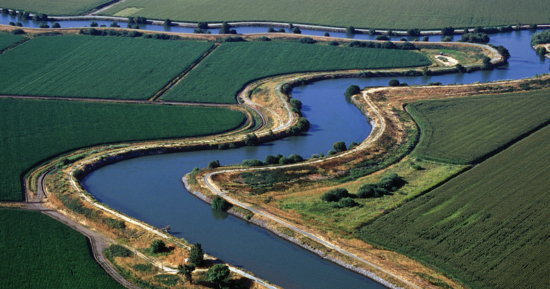
On July 21, 2017, the California Department of Water Resources (“DWR”) certified the final environmental document and issued its Notice of Determination for the California WaterFix, a significant new water infrastructure component proposed by DWR and United States Bureau of Reclamation. DWR’s action triggered a 30-day statute of limitations to raise CEQA challenges to the
US EPA Issues Three Major Rules Affecting Chemicals Industry
On June 22, 2017, US EPA issued three major rules required by the Frank R. Lautenberg Chemical Safety for the 21st Century Act (LCSA), which amended the Toxic Substances Control Act (TSCA) in 2016. The three TSCA rules addressed: (1) “resetting” the TSCA Inventory, (2) chemical substances prioritization, and (3) risk evaluations for
State Legislature Reaches Agreement on Extension of the Greenhouse Gas Cap-and-Trade Program; Stops the Bay Area Air Quality Management District’s Proposed Cap (and-No-Trade)
 On July 17, 2017 the California legislature approved an extension of the state’s greenhouse gas cap-and-trade program from 2020 to 2030. Cap-and-trade is a key program in the state’s efforts to meets its 2030 greenhouse gas reduction goals of 40% below 1990 levels covering emissions from industrial facilities and electricity and natural gas suppliers.
Governor
D.C. Circuit Strikes Down Portions of the RCRA Definition of Solid Waste Rule
On July 7, 2017, the D.C. Circuit Court of Appeals issued a decision striking down portions of US EPA’s Definition of Solid Waste (DSW) Rule, which defines when certain hazardous secondary materials (i.e. recyclable materials generated as the remainder of industrial processes) become “discarded” and thus subject to regulation as a solid waste. The Rule,