E2 Law Blog

Insights and Commentary on Global Environmental and Energy Issues

Latest from E2 Law Blog - Page 27

The Maryland Department of the Environment has for many years sought to meet its obligations under the Clean Water Act and the Chesapeake Bay Total Maximum Daily Load in part by imposing obligations on municipal separate storm sewers (MS4s) beyond the statutory minimum imposition of control to the “maximum extent practicable” or “MEP.” Specifically, it

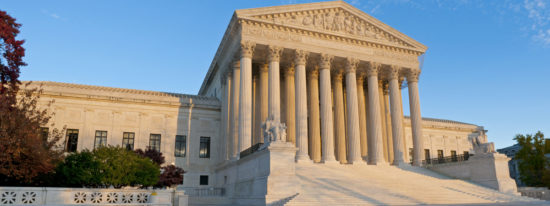
This article is an effort to hit the “reset” button on the frequently breathless commentary on the recently argued Supreme Court case (West Virginia et al v. EPA) addressing the scope of the United States Environmental Protection Agency’s (“EPA”) authority to regulate greenhouse gas emissions from existing fossil-fuel powered power plaints.

Click here to read

On his first day in office, President Biden issued Executive Order 14008, calling on federal agencies to prioritize environmental justice and find ways to address disproportionate pollution impacts on low-income or minority communities. The president’s directive is clear and succinct, but its path to implementation far less so, as agencies struggle with statutory limitations,

In Part 2B of Greenberg Traurig Environmental Shareholder David Mandelbaum’s conversation with William Hengemihle of FTI Consulting on Superfund allocation disputes under the Comprehensive Environmental Response, Compensation and Liability Act (CERCLA), the federal program for cleaning up sites contaminated by historic operations, they discuss fault and when it may trump cost causation, “transactional fairness,” use

Greenberg Traurig Environmental Shareholder David Mandelbaum is joined by William Hengemihle of FTI Consulting for a second conversation on Superfund allocation disputes under the Comprehensive Environmental Response, Compensation and Liability Act (CERCLA), the federal program for cleaning up sites contaminated by historic operations. In Part 2A, David and Bill discuss building a suggested allocation methodology,

Consider two longer-term trends in environmental law and policy: (a) refocusing from rural and wild places to the environment where people are, and (b) dealing with the regulatory advantage given to existing things rather than new things when that is probably backwards. The first in particular dovetails with some of the points made by the