On 6 December 2021, the Netherlands became the latest European government to announce plans to introduce mandatory human rights and environmental due diligence (HREDD) legislation at a national level, adding to a growing movement and proliferation of national HREDD laws. This puts the Netherlands in the company of the likes of France, Germany and Norway (which have enacted or adopted such laws) and Austria, Belgium and Switzerland, among others (which are progressing their own national HREDD laws).

This development comes despite further delay on the publication of HREDD legislation at an EU level (see our previous Blog Post). On 6 December 2021, the Dutch Foreign Trade and Development minister said that he was “very disappointed” at the European Commission’s further delay to introduce EU mandatory HREDD legislation and announced the Dutch Government’s plans to develop and introduce a national HREDD law instead.

Researchers from RTI International (Research Triangle Institute), the Pennsylvania Department of Health, Temple University, and Brown University are seeking 1,000 adults and 300 children to participate in a per- and poly fluoroalkyl substances (PFAS) exposure study: the Pennsylvania PFAS Multi-site Health Study.  Beginning in November 2021, the study is now open for eligible participants

In July 2021, Ohio’s 2022-2023 budget allocated $500 million in new brownfield funding under various development programs: $350 million for the investigation, cleanup, and revitalization of brownfield sites and another $150 million for the demolition of vacant or abandoned commercial or residential buildings.

The Ohio Department of Development (ODOD) will administer the funding and is

The European Commission has indefinitely postponed its much-anticipated directive on human rights and environmental due diligence (HREDD) – more than 150 days after it was first expected to be published. While the reason for the delay is unclear, 47 civil society organisations have penned an open letter seeking “full transparency on the reasons for the delay and on the decision-making process going forwards.”

Despite this setback, national HREDD legislation continues afoot: laws have been adopted or are in force in France, Germany and Norway, while proposed national legislation is being progressed in a number of other European countries. Most recently, in December 2021, the Netherlands announced its intent to introduce its own national HREDD law in view of the further delay of the proposed EU law.

Legislative developments aside, investors, civil society and other stakeholders are scrutinising how companies identify and mitigate human rights impacts in their operations and supply chains more closely than ever.

And so the message is clear: companies still need to take steps to develop and reinforce their human rights due diligence programmes, both in anticipation of further mandatory HREDD laws and to respond to stakeholder expectations and demands.

On October 21, the U.S. District Court for the Northern District of California vacated and remanded the U.S. Environmental Protection Agency’s (EPA) 2020 Clean Water Act Section 401 final rule (Certification Rule).

In response to the court’s ruling, EPA is implementing the previous water quality certification rule nationwide, which had been in effect since 1971, while it develops a new rule.

In an opinion certified for partial publication, the Third Appellate District on November 3, 2021, decided Farmland Protection Alliance v. County of Yolo, finding that the California Environmental Quality Act (“CEQA”) does not allow an agency to split environmental review across multiple levels of review—for example, by preparing a negative declaration to address some project issues and an environmental impact report to address others. Rather, CEQA requires an agency to prepare a full EIR whenever any aspect of a project may have a significant effect on the environment.

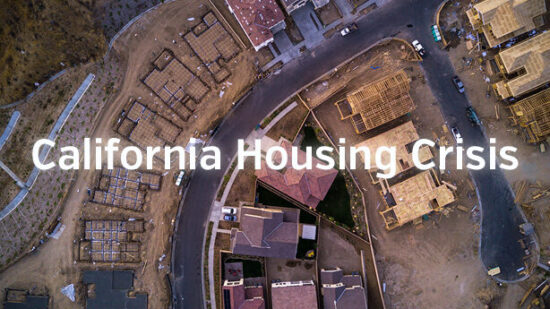
This legislative year, Governor Gavin Newsom signed into law thirty-one pieces of legislation designed to combat California’s ongoing housing crisis by providing tools to expand housing production, streamline housing permitting, and increase allowable density across the state.  Key housing-related bills, which take effect on January 1, 2022, unless otherwise noted, are discussed below.

  • SB 7, known as the Housing and Jobs Expansion and Extension Act, took immediate effect as an “urgency statute” to address the state’s housing crisis through zoning and the California Environmental Quality Act (CEQA) reform. It reenacts AB 900 through 2025 and extends expedited CEQA review for small-scale infill housing projects.  For a more in-depth discussion of SB 7, please refer to Downey Brand’s previous CEQA Chronicles SB 7 blog post.
  • SB 8 extends the term of the Housing Crisis Act of 2019 (SB 330) to January 1, 2030, and allows applicants who submit qualifying preliminary applications for housing developments prior to January 1, 2030 to utilize the protections of the Act through January 1, 2034. SB 8 also clarifies aspects of the existing law.  SB 330 included procedural and substantive protections for qualifying housing development projects such as accelerating the approval process, limiting fee increases on housing applications, and implementing accountability provisions.  Through SB 8, the Legislature clarifies the definition of a “housing development project” for purposes of the Housing Crisis Act to include projects that involve no discretionary approval, projects that involve both discretionary and ministerial approvals, and projects that include construction of a single dwelling unit.  SB 8 adds demolition, relocation, and return rights, and also clarifies that developers cannot demolish multiple units and replace them with a single family home.