
On Friday, December 17, the Environmental Protection Agency (EPA) quietly issued a Q&A document concerning the vacatur of the 2020 Section 401 Certification Rule (2020 Rule). The Q&A confirms EPA’s view that the 1971 certification regulation is now in effect nationwide, but does not present a policy or legal rationale for this decision. Although much
First District Holds SWRCB Small Domestic Water Use Registration Is CEQA-Exempt Ministerial Act: “CEQA Does Not Regulate Ministerial Decisions – Full Stop.”
In a published opinion filed December 15, 2021, the First District Court of Appeal (Div. 5) affirmed a trial court’s judgment entered after sustaining a demurrer to a writ petition in a CEQA action without leave to amend. Mission Peak Conservancy, et al. v. State Water Resources Control Board (Christopher George, et al, Real Parties in Interest) (2021) 72 Cal.App.5th 873.
Sixth Circuit Revives OSHA COVID-19 Emergency Temporary Standard
On Friday, the U.S. Court of Appeals for the Sixth Circuit lifted a stay of OSHA’s Emergency Temporary Standard (ETS) on COVID-19 vaccination and testing for employers with 100 or more employees. As we previously posted, the Fifth Circuit almost immediately issued a stay of the ETS after its release. The Sixth Circuit’s ruling
Sixth District Holds Coastal Commission’s Post-Approval Analysis of Coastal Development Permit’s Environmental Impacts Violates CEQA
In an opinion filed November 15, and later ordered published on December 14, 2021, the Sixth District Court of Appeal reaffirmed the basic CEQA principle that required environmental review and analysis must precede project approval, and it applied that principle to invalidate the California Coastal Commission’s (Commission) approval of a Coastal Development Permit (CDP) for a residential subdivision project in Monterey County. Friends, Artists and Neighbors of Elkhorn Slough v. California Coastal Commission (Heritage/Western Communities, Ltd., et al., Real Parties in Interest) (2021) 72 Cal.App.5th 666. While the dispositive rule is a simple one, the case’s more complex facts and procedural history make it interesting – and somewhat disturbing – on a number of levels.
Illinois Environmental Protection Agency Proposes New PFAS Standards

On December 7, 2021, the Illinois Environmental Protection Agency (IEPA) filed proposed amendments to Illinois’ groundwater quality standards with the Illinois Pollution Control Board (Board). The proposal includes Class I and Class II groundwater quality standards for six per- and polyfuoroalkyl substances (PFAS), including perfluorooctanoic acid (PFOA), perfluorooctanesulfonic acid (PFOS), perfluorononanoic acid (PFNA), perfluorohexanesulfonic acid (PFHxS), perfluorobutanesulfonic acid (PFBS), and hexafluoropropylene oxide dimer acid (HFPO-DA). Illinois follows several states that are choosing to regulate PFAS constituents while federal regulation of the constituents is pending. Ubiquitous, PFAS can be found in a variety of consumer products, industrial processes, and fire-fighting foams, and can come to be located throughout the environment.
California Tweaks Proposed Revisions to Limit Use of Prop 65 “Short Form” Warnings (Updated)
Almost a year after initially proposing revisions that would substantially curtail use of the popular “short form” warnings under Proposition 65 (see my prior blog post for more details), the California Office of Environmental Health Hazard Assessment (OEHHA) has issued a modified proposal and requested public comment by January 14, 2022. [UPDATE: OEHHA subsequently
Antitrust Scrutiny Heating Up in Oil and Gas Industries

President Biden recently wrote a letter to FTC Chair Lina Khan urging the Commission to immediately investigate potential anticompetitive behavior in the oil and gas sector. The President noted that gas prices have been rising, while the costs faced by oil and gas companies themselves have decreased. Concerned that the two largest oil and gas companies in the country are set to double their net income over 2019 while the gap between the price of unfinished gasoline and the price at the pump is increasing, he called on the FTC to “bring all of the Commission’s tools to bear if you uncover any wrongdoing.”
DOJ Targeting Employees for Criminal Environmental Prosecution: Tips for Minimizing Exposure
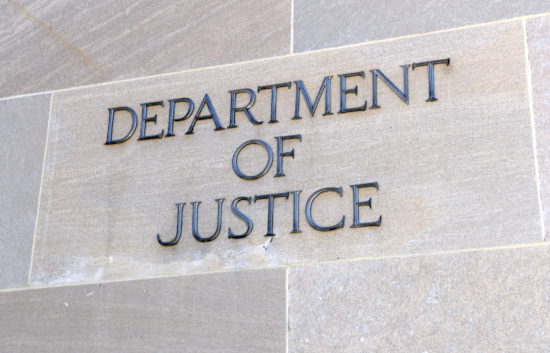
The top U.S. Department of Justice (DOJ) Environmental official has put corporate employees on notice that DOJ is increasing its focus on prosecuting individuals for environmental crimes, including the threat of jail time. In a pre-recorded keynote address to the American Bar Association (ABA) National Environmental Enforcement Conference on December 14, 2021, Assistant Attorney General for the Environment and Natural Resources Division (ENRD) Todd Kim stated, “Only individuals can go to jail, and we have found that criminal corporate accountability starts with accountability for individuals responsible for criminal conduct.”
Fourth District Court of Appeal finds Class 32 Exemption’s Massing Criterion Based on Project Size, not Site Size; Rejects Applicability of the Unusual Circumstances Exception

In Protect Tustin Ranch v. City of Tustin (2021) 70 Cal.App.5th 951, the Fourth District Court of Appeal affirmed the trial court’s determination that the Class 32 infill categorical exemption was properly applied to a project which would redevelop a portion of a shopping center in the City of Tustin (City) and rejected the
Contractors Have an Opportunity to Help Shape ESG Requirements
Addressing climate change has been a priority for President Biden since his first day in office. On December 8, 2021, President Biden continued that focus by issuing Executive Order (EO) 14057, Catalyzing Clean Energy Industries and Jobs Through Federal Sustainability, which includes a number of requirements directed at introducing sustainability to federal acquisitions.