Uncategorized

Earlier this month, Judge William Young dismissed for lack of standing claims brought by the Conservation Law Foundation alleging that bus companies violated anti-idling regulations.  The opinion is important, because it does not make life easy for citizen plaintiffs and it provides something of a roadmap for defendants to follow in challenging plaintiffs’ standing.
The

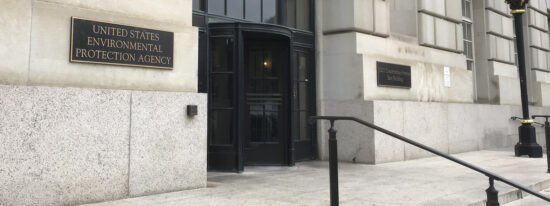
On Aug. 17, 2023, the U.S. Environmental Protection Agency (EPA) announced its final, revised National Enforcement and Compliance Initiatives (NECIs) for fiscal years 2024-2027, seven months after soliciting public comment on its proposals. The six final NECIs include three new subject areas (climate change, PFAS, and coal ash), retain three existing NECIs (air toxics, drinking

Please join members of Greenberg Traurig’s Energy & Natural Resources Practice, along with CEO of Storengy Catherine Gras, for a webinar titled “Navigating the Hydrogen Horizon: Regulatory Update.”

Topics include:

  • Hydrogen storage strategies
  • Federal hydrogen regulation in the United States
Dr. Martin BorningLocal PartnerGreenberg Traurig(Moderator)Catherine GrasCEOStorengyFrancesca Ciliberti-AyresOf CounselGreenberg Traurig

Last week, Inside EPA (subscription required) reported that the Texas Commission on Environmental Quality has basically informed EPA that EPA may not promulgate guidance on cumulative risk assessments because of questions about its legal authority to require CRAs. 
If EPA plans to interpret such environmental regulations as providing EPA with the authority to require that

On May 24, 2023, Minnesota’s Governor signed into law a sweeping set of statutory provisions concerning the handling and sale of PFAS-containing products within Minnesota. Among other things, the statute sets a ban on various categories of products containing PFAS, imposes reporting requirements for manufacturers, and directs the Minnesota Pollution Control Agency (“MPCA”) to adopt

Last week, the California Legislature passed two bills comprising the core of a landmark “Climate Accountability Package.”  Together, the two bills will impose extensive new climate-related disclosure obligations on thousands of U.S. public and private companies with operations in California.  Senate Bill 253 (SB 253) would require companies with greater than $1 billion in annual

Last week, the California Legislature passed two bills as part of the state’s landmark “Climate Accountability Package.”  If signed by Governor Newsom as anticipated, the two laws—Senate Bill 253 (SB 253) and Senate Bill 261 (SB 261)—will usher in significant climate-related disclosure requirements for thousands of U.S. public and private companies that do business in