By Brent I. ClarkAdam R. Young, A. Scott Hecker, Ilana R. Morady, and Craig B. Simonsen

Seyfarth SynopsisWe recently blogged that Silica is the New Asbestos: New OSHA Regional Emphasis Program Will Target Respirable Silica Hazards in Six States. Now the federal Mine Safety and Health Administration
The consultations invite stakeholders’ views on the Environmental Liability Directive and the Waste Framework Directive.

By Paul A. Davies, Michael D. Green, and James Bee

In May 2022, the European Commission (Commission) issued public consultations in relation to the proposed revision of two of the EU’s key environmental frameworks. The consultations on the Environmental Liability Directive (ELD) issued on 12 May and the Waste Framework Directive (WFD) issued on 24 May mark the latest in a series of steps that the Commission is taking to revise and strengthen environmental controls in the EU, following on from the EU’s 2019 Green Deal.

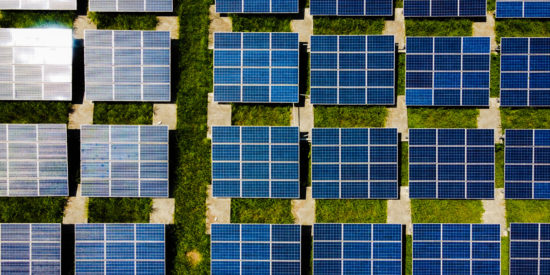
On June 6, 2022, President Biden issued the Declaration of Emergency and Authorization for Temporary Extensions of Time and Duty-Free Importation of Solar Cells and Modules from Southeast Asia (emergency declaration), which provides for the importation of solar panels and cells from Cambodia, Malaysia, Thailand, and Vietnam free of certain duties for a

The 2022 Chambers USA Guide recognized the Environmental Practice of global law firm Greenberg Traurig, LLP on its nationwide list of the top 31 environment practices in the country. The editors also ranked the firm’s Environmental Practice in Colorado, Florida, New York, and Pennsylvania. The editors ranked individual members of the Environmental Practice in Arizona,

On June 2, 2022, the US Commodity Futures Trading Commission (“CFTC”) released a request for information on how climate-related financial risk is related to the derivatives markets and underlying commodities markets (the “RFI”). The RFI is intended to inform the CFTC’s next steps in this rapidly developing area and respond to the 2021 Report on Climate-Related

The proposal would auction off almost 375,000 acres of the Outer Continental Shelf offshore California for wind energy development.

By Nikki Buffa, Janice M. Schneider, Nathaniel Glynn, and Brian McCall

On May 31, 2022, the Bureau of Ocean Energy Management (BOEM) published a Proposed Sale Notice (PSN) for a pair of renewable energy lease sales offshore California. The PSN — which is the third offshore wind auction under the Biden-Harris Administration — represents a major inflection point in the complex and sometimes contentious process to bring wind power to the Outer Continental Shelf (OCS) offshore California. The timing of the PSN also dovetails with the California Energy Commission’s May 2022 announcement of the nation’s most ambitious target for offshore wind development: the state is seeking to construct 3 gigawatts of offshore wind capacity by 2030, with the potential for 10 to 15 gigawatts by 2045.

Presidential Action Triggered by Crisis in the U.S. Solar Industry

In recent months, the U.S. solar industry has been in the midst of an existential crisis, triggered by the threatened imposition of retroactive and future tariffs on a significant portion of U.S. imports. That crisis began on April 1, 2022, when the Department of Commerce (“Commerce”) initiated an inquiry to determine whether solar cells and modules from Cambodia, Malaysia, Thailand, and Vietnam are circumventing antidumping (“AD”) and countervailing duty (“CVD”) orders on solar cells from China. Solar cells from these countries generally accounted for approximately 80% of U.S. solar module imports in 2020.[1] If Commerce finds circumvention, solar cells and modules from the four target countries could not only be subject to combined AD/CVD tariffs approaching 250%, but Commerce’s regulations also allow for the agency to apply these tariffs retroactively to merchandise entering on or after April 1, 2022 (and potentially as far back as November 4, 2021). This threat of AD/CVD tariffs triggered a steep decrease in imports of solar cells and modules from Southeast Asia, and caused parts of the U.S. solar industry to come to a stand-still, furthering domestic reliance on coal.[2] Given this paralysis in the solar industry, lawmakers and others urged the President to provide relief from potential AD/CVD tariffs.[3]